Blog

  • Indian Seafarers: Respected Today, But Will We Stay in Demand Tomorrow?

    Indian Seafarers: Respected Today, But Will We Stay in Demand Tomorrow?

    Indian seafarers have long been a force to reckon with in the global maritime industry. We’re among the highest-paid Asian seafarers, commanding respect on the bridge, in the engine room, and in management roles ashore.

    Shipowners continue to hire Indians despite higher costs—proof that we’re doing something right.

    But now, a pressing question arises:

    Can Indian seafarers maintain their dominance, or are we slowly losing our edge to lower-cost, highly motivated counterparts?


    Where We Stand: Indian Seafarers by the Numbers

    • Indian seafarers employed (2024): Over 2,50,000, up from just 92,000 in 2014 (as per DGS).
    • 📈 Growth: India has seen a 171% increase in seafarer deployment over the past decade.
    • 🌏 Global competition rising:
      • Philippines: Over 5,00,000 active seafarers; known for long contracts and low wages.
      • China: Fast-growing pool with heavy government support.
      • Indonesia, Myanmar, Vietnam: Producing more certified, English-speaking seafarers each year.

    India is in a strong position—but not an unshakable one.


    Why Are Indian Seafarers Still Preferred?

    Despite higher salary expectations, Indian seafarers are valued for:

    • Proficient English: Smooth interaction with multinational crews.
    • Strong technical base: Quality education from institutes like IMU, Tolani, and training centers under DGS.
    • Problem-solving skills: We’re known to take initiative and handle machinery and bridge operations smartly.
    • Leadership potential: Indian officers frequently rise to senior ranks earlier.

    But these strengths are no longer unique—others are catching up fast.


    The Warning Signs: Are We Pricing Ourselves Out?

    Here’s the reality we must face:

    • 💰 High wage expectations: Indian officers earn 20–30% more than many Asian peers.
    • 🛑 Shorter contract preferences: We prefer 4–6 months, while others readily accept 9–12 months.
    • 📶 More demands: From high-speed Wi-Fi to Indian-style food to recreational facilities.
    • 😕 Reduced willingness for hardship: Fewer Indians want to join dry docks, coastal ships, or older vessels.

    Result? Shipowners sometimes opt for equally competent, cheaper, and more accommodating seafarers.


    How Can Indian Seafarers Stay Relevant?

    1. 🛠️ Document Everything – Share Knowledge

    Let’s stop making the same mistakes.
    If you solve a recurring issue—like an autopilot alarm fixed by tweaking a setting—write it down.
    Place a laminated log or folder near the equipment for easy access. Engineers can do the same with motor faults, purifier errors, etc.
    Make this part of your handover. It’s teamwork.

    2. 🎓 Be a Lifelong Learner

    Attend online webinars, upgrade certificates, learn the basics of other departments. Know your engine room if you’re on deck, and understand bridge routines if you’re in the engine room.

    3. 📊 Practice Time & Resource Management

    Cut down time wastage during watchkeeping, routine maintenance, and drills. Respect spares. Don’t treat every issue as someone else’s job.

    4. 💬 Improve Soft Skills

    Leadership is not barking orders. Be approachable. Communicate with purpose. A calm, skilled officer is more valuable than a loud, bossy one.

    5. 🧠 Adapt to Modern Tech

    Familiarize yourself with systems like:

    • ORCA AI, Voyager AI, One Ocean (passage planning and route optimization)
    • Electronic Chart Display and Information System (ECDIS) upgrades
    • Remote diagnostics in the engine room

    AI is coming fast. If we don’t adapt, we’ll be replaced—not just by people, but by machines.


    A Message for the Future

    India’s maritime sector is booming. We’re exporting thousands of seafarers every year. But numbers alone don’t guarantee demand.

    Shipowners are watching:

    • Who’s efficient?
    • Who’s adaptable?
    • Who’s cost-effective?

    We need to prove that Indian seafarers are not just expensive, but exceptional.


    Let’s Lead by Example

    • Keep your workspace clean.
    • Share your knowledge.
    • Mentor the next guy.
    • Respect your job—even the boring parts.

    Because tomorrow’s hiring decisions are based on today’s performance.


    📝 Final Note

    This blog is a wake-up call for Indian seafarers. We’ve come a long way—but we must keep evolving to stay relevant.

    👉 If you have a story, suggestion, or experience to share, contribute to Shippys.org.
    Anonymous entries are welcome. Let’s grow together.

  • Is the 2nd Officer the Next Victim of AI in the Merchant Navy?
    Is the 2nd Officer the Next Victim of AI in the Merchant Navy?

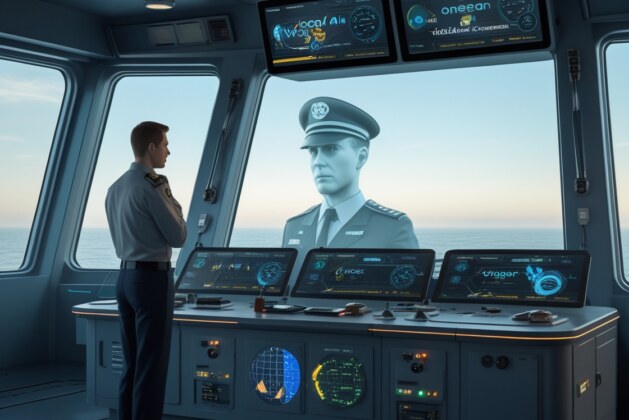
    Once, every ship had a Radio Officer. Then came GMDSS, satellite communications, and automation—and the role faded into history. Today, the 2nd Officer, long seen as the ship’s navigator and planner, might be heading toward a similar fate, thanks to the rise of AI and intelligent marine software.


    The Evolving Role of the 2nd Officer

    Traditionally, the 2nd Officer has been responsible for:

    • Passage planning and route plotting
    • Chart corrections and publication updates
    • Meteorological monitoring and reports
    • Sending noon reports and vessel position updates
    • Operating GMDSS equipment
    • Watchkeeping and bridge management support

    But now, these core duties are being automated by software solutions that promise speed, accuracy, and optimization.


    AI Has Already Boarded the Bridge

    Here are some cutting-edge platforms that are redefining ship operations:

    • Orca AI: Uses computer vision and machine learning to enhance situational awareness, detect potential collisions, and optimize navigation in congested waters.
    • Voyager AI (by Voyager Worldwide): Automatically generates passage plans, provides real-time navigation data, and updates charts digitally—significantly reducing manual effort.
    • OneOcean (Enhanced): Offers a fully integrated platform for voyage planning, compliance, and environmental management, including digital reporting tools and automated chart updates.
    • Wärtsilä Navi-Planner: Allows remote voyage planning and execution, and integrates seamlessly with bridge systems to assist with decision-making.
    • ABB Ability™ Marine Pilot Control: Provides automated navigation support, including route optimization and collision avoidance, especially for remote or unmanned vessels.

    With these tools handling everything from planning to reporting, the traditional tasks of the 2nd Officer are shrinking rapidly.


    What’s Left for the 2nd Officer?

    The 2nd Officer is evolving into more of a system supervisor than a traditional navigator. Much like the Radio Officer once did, they now spend more time monitoring systems than actively creating or updating them.

    AI doesn’t sleep, doesn’t forget chart updates, and can analyze thousands of data points instantly. With machine learning continuously improving decision-making algorithms, the question arises: Does the 2nd Officer still have a long-term place on board?


    Is This the Beginning of the End?

    The maritime industry is exploring:

    • Reduced manning models
    • Shore-based navigation teams
    • Semi-autonomous bridge operations
    • Multi-functional officers instead of specific ranks

    For the 2nd Officer, this could mean:

    • Less hands-on navigational work
    • Greater emphasis on technical troubleshooting and systems monitoring
    • Cross-training in compliance, cyber-security, and automation

    Why the Human Element Still Matters—for Now

    Despite all the tech:

    • AI lacks judgment during unexpected emergencies
    • Machines can’t match human adaptability in morally complex decisions
    • System failures still require manual intervention
    • Leadership, communication, and safety drills need people

    So while AI tools like Orca AI and OneOcean enhance navigation, they’re not yet ready to replace human instinct and accountability entirely.


    Adapt or Be Replaced

    If you’re a 2nd Officer today, it’s time to reskill and rethink your future. Here’s how to stay relevant:

    • Learn to operate and troubleshoot advanced navigation systems
    • Gain data literacy and understanding of AI workflows
    • Take courses in cyber awareness and integrated ship systems
    • Stay updated on trends in maritime automation and compliance

    The 2nd Officer role may not disappear entirely—but it will be transformed.


    Final Thoughts

    The Radio Officer didn’t disappear because they were less skilled—it happened because technology evolved faster than roles adapted. Now, the 2nd Officer is standing on that same cliff edge.

    AI-driven systems like Voyager AI, Orca AI, and OneOcean are not threats—they’re tools. But the person who doesn’t know how to use them is at risk.

    The future doesn’t eliminate seafarers—it demands smarter, more tech-savvy ones.


    📢 If you’re a seafarer seeing changes in your duties because of AI, or have experience using these systems, share your story with us at shippys.org. Let’s document this digital evolution together.

  • Why Are All Ports Not Convenient for Seafarers?

    Why Are All Ports Not Convenient for Seafarers?

    The shipping industry is the silent engine of globalization—carrying over 90% of world trade across oceans. It’s often said that if shipping were to stop, half the world would go hungry.

    Yet, amid this undeniable importance, one vital element remains neglected: convenient access to ports for seafarers.

    🚢 Not All Ports Are Equal

    While ships can trade anywhere, crew relief, stores, and spares don’t enjoy the same flexibility. For a seafarer awaiting sign-off or expecting fresh provisions or critical machinery parts, only a handful of ports around the world are considered “convenient.” But why should that be the case in an era of global connectivity?

    ✈️ The Flight, Visa & Bureaucracy Barrier

    Some regions like South America, parts of Africa, and Indonesia are often skipped for crew changes simply because of high visa fees, complex immigration rules, or expensive flights. Even some European ports are avoided due to logistical or cost reasons. The result? Crew members are asked to “wait for the next port”—a next port that might be weeks, even months away.

    What starts as a 6-month contract often stretches into 8 or 9, simply because arranging relief at a “cheaper port” is easier on the company’s pocket.

    ⚙️ Spares & Stores: Still a Struggle

    The situation is no better when it comes to stores or critical spare parts. Many African ports, for instance, struggle with availability of technical services. I recall once when our gyrocompass was due for annual servicing—we reminded the office several times, yet no service technician was arranged.

    Only when the gyro failed six months later—at anchorage—did the company finally act. Thankfully, we were not sailing in heavy traffic when it happened.

    🧭 A Global Workforce With Local Problems

    Seafarers are global workers. They navigate international waters, abide by global regulations, and transport cargo for multinational corporations. So why do they have to deal with localized red tape, arbitrary port restrictions, and penny-pinching delays?

    If we can track a parcel from warehouse to doorstep across continents, surely we can build a system that supports efficient crew changes and spare deliveries worldwide.

    🛑 Time for Institutions to Intervene

    Organizations like IMO (International Maritime Organization), ILO (International Labour Organization), and ISF (International Shipping Federation) must step up. There needs to be a global resolution that ensures:

    • Every major trading port designates proper facilities for crew relief and service access
    • A standard set of immigration and visa protocols for seafarers
    • Encouragement of international cooperation to ease cost burdens on companies
    • Penalties for unreasonable delay in crew sign-offs or technical servicing

    ⚓ Let’s Not Forget the Human Element

    Seafarers keep the world running—quietly and without complaint. But that doesn’t mean they should be ignored. Behind every delayed sign-off or missed spare delivery is a tired worker missing home, or a potential safety hazard building up.

    Let’s make every port a seafarer-friendly port. Because when we ease life for those at sea, we make the entire industry—and the world—a more resilient place.


    The author is a Chief Officer sailing on merchant ships with years of experience navigating oceans and handling real-life challenges at sea. He writes from firsthand experience—sharing the ups, downs, and everything in between that comes with life onboard. Through his writing, he hopes to give a voice to fellow seafarers and spark change where it’s long overdue.

    Have something to share?
    If you’re a seafarer with a story or suggestion, contribute to shippys.org. Anonymous entries are welcome. Let your voice be heard.

    👉 Contribute now and be a voice for the community.
    For more information, click here.

    #SeafarersMatter #ShippingLife #CrewChangeCrisis #MaritimeSafety #ConvenientPorts #GlobalTrade

  • Medical Help Onboard – A Matter of Empathy, Not Ego

    Medical Help Onboard – A Matter of Empathy, Not Ego

    This article is based on a real-life experience shared anonymously by a general steward with Shippys.org, a platform that gives voice to seafarers’ untold stories.

    The steward recalled an incident where, upon reporting a genuine health concern to the 2nd Officer, he was mocked with an inappropriate comment linking his condition to masturbation. To his dismay, the Captain also joined in, rather than offering support. This experience highlights the toxic culture that still exists onboard some ships — where ridicule replaces empathy, and reporting a health issue is seen as a weakness.

    While the identities of those involved have been kept confidential, this story sheds light on a broader issue many seafarers face and calls for a much-needed change in onboard attitude and leadership.

    Life at sea is demanding, and physical as well as mental well-being is critical to a safe and efficient operation. Unfortunately, a troubling trend continues to persist onboard many vessels — the tendency to ignore or even mock someone who reports a health issue. This mindset is not only harmful but can also lead to serious consequences for the individual and the entire crew.


    Not Every Issue Needs a Hospital Visit

    It’s important to remember that not all medical issues require a hospital visit. Some can be effectively managed onboard with basic medical attention, rest, and monitoring. That’s why ships are equipped with a medical locker and basic first aid supplies. More importantly, every vessel has a designated medical officer — usually the 2nd Officer — who acts as the first responder for health concerns.

    But here’s the problem: many seafarers hesitate to report issues out of fear of being mocked, ignored, or labeled as lazy. This culture must change.


    The Wrong Approach: Mockery and Dismissal

    Imagine going to a doctor ashore with a health concern, only to be laughed at or brushed off without being taken seriously. How would that feel?

    Now, translate that situation to a ship. When a crew member gathers the courage to report a health issue and is met with ridicule or indifference, it not only demoralizes him but can delay critical treatment. On ships, delays can mean the difference between a manageable condition and a medical evacuation.


    Leadership Matters

    Some Captains and Chief Engineers, unfortunately, view a crew member reporting sick as a liability — something that increases paperwork, raises costs for the company, or reflects poorly on their own performance. But this mindset is flawed.

    Suppressing genuine health concerns doesn’t solve a problem — it worsens it. And if things escalate, the situation may demand shore medical assistance, repatriation, or even legal scrutiny — all of which are far more damaging, financially and reputationally, than taking early action.


    What Really Happens Onboard

    Here are some common scenarios that many seafarers would relate to:

    • A sick crew member is asked, “Why don’t you just rest and continue tomorrow?”
    • Others joke behind his back, calling him weak or lazy.
    • The 2nd Officer is hesitant to make an entry in the medical logbook.
    • The Captain frowns at the thought of making a medical report to the company.
    • The sick person is made to feel guilty for being unwell.

    All these actions create an unhealthy and unsafe working environment.


    Medical Assistance from Ashore: A Vital Resource

    Today, ships are not alone when it comes to medical emergencies. Most companies have tie-ups with telemedical assistance providers (TMAS) who are available 24/7 to guide onboard medical care.

    Even from the middle of the ocean, the ship’s medical officer or Master can:

    • Contact shore-based doctors for expert advice.
    • Share vital signs, photos, or videos to help with remote diagnosis.
    • Get step-by-step treatment guidance.
    • Decide with the doctor whether evacuation or diversion is needed.

    This service is confidential, professional, and focused on the well-being of the crew. It should never be viewed as a burden or something to be avoided just to save paperwork or costs.


    A Culture of Care

    It’s time to shift the mindset. Reporting a medical issue should be seen as a responsible act, not an excuse. We must:

    • Encourage open communication about health.
    • Support the designated medical officer in maintaining records and taking proactive action.
    • Train senior officers to respond with empathy and professionalism.
    • Make wellness a routine part of safety meetings, not an afterthought.
    • Use ashore medical assistance without hesitation when in doubt.

    Final Thoughts

    The sea is unforgiving, and a crew’s strength lies in its unity and support for one another. Health issues, when addressed early and respectfully, save lives and strengthen morale.

    So next time someone approaches you with a health concern, don’t dismiss or downplay it. Listen, help, and support — because tomorrow, it could be you needing that same compassion.


    📝 Share Your Story

    If you’ve experienced or witnessed something similar onboard — whether it’s about health, work culture, or life at sea — your voice matters. Shippys.org is a platform dedicated to bringing real seafarer experiences to light.

    📩 Contribute your story and help create awareness and change.

    👉 For more information or to submit your experience, click here

  • Life of a Seafarer: A Brief Overview

    Life of a Seafarer: A Brief Overview

    Author is a Chief Officer who has spent over a decade navigating the world’s oceans, leading deck operations and ensuring the safety of crew, cargo, and vessel alike. Through his writing, he hopes to bridge the gap between land and sea—sharing the untold stories, challenges, and pride of a life lived offshore.

    The life of a seafarer is not just a profession—it’s a way of life, a mindset, and in many ways, a world apart from the ordinary. While most people on land go about their daily routines surrounded by family, friends, and the comforts of home, those of us at sea live in an entirely different rhythm—one defined by discipline, solitude, and resilience.

    After spending years navigating the oceans, we, the seafarers, inevitably develop a unique personality. We become highly organized, value punctuality, prioritize safety, and carry a deep respect for the environment. These habits are second nature onboard, where structure and awareness can make the difference between order and chaos, safety and disaster.

    The Reality Behind the Romance

    To outsiders, seafaring may seem romantic—visiting exotic ports, witnessing sunrises in the open sea, and living a life of adventure. While these moments do exist, they are fleeting compared to the reality of long hours, hard work, and mental isolation.

    Life at sea is tough. You’re away from your loved ones for months, often missing birthdays, anniversaries, and the little milestones that make up everyday family life. The loneliness can be deafening, but it also teaches us to be self-reliant, to find peace in solitude, and to value genuine human connection even more deeply.

    Adapting to the Shore—But Never Truly Fitting In

    When we finally come ashore, people expect us to blend right back into normal life—but we rarely do. Our minds are still tuned to the ship’s clock. We’re used to fixing problems with limited resources, making do, and getting things done without excuses. We prefer order, and we often find the laid-back attitude ashore difficult to digest.

    Even during our so-called vacations, we are far from idle. Shore leave is often spent updating maritime certifications, undergoing medicals, solving domestic issues that piled up in our absence, and catching up on the investments and responsibilities we’ve put on hold. In between, we also try to reclaim our health—both physical and mental—which often takes a toll after months of work under stressful conditions.

    Sacrifices Behind the Paycheck

    It’s true that seafarers are paid well compared to many shore-based jobs, but this comes at a cost. Mental health challenges, relationship strain, lack of job security due to automation and evolving regulations, and increasing scrutiny from authorities in every port—these are just a few realities we deal with.

    There is also the constant uncertainty: Will I get a timely contract? What new regulations will be in force? Is my company financially stable? Are pirates still active in certain zones? Will there be Wi-Fi on my next ship to at least speak to my family?

    Pride That Cannot Be Taken Away

    Despite it all, there is something deeply fulfilling about this life. We are among the few who truly understand the pulse of global trade, who face the wrath of the sea and survive, who keep the wheels of commerce moving—often unseen and unthanked.

    We are engineers, navigators, doctors, electricians, cooks, problem-solvers, and peacekeepers—all in one. We live among people from diverse cultures, learn to work as a team in high-pressure environments, and build lifelong friendships across borders.

    No, we may not always fit into “normal society”—but we are proud of who we are.

    I am a seafarer. And that, in itself, is enough.


    Shippys.org is built by seafarers, for seafarers. We aim to share real stories, insights, and experiences from life at sea. Whether you’re a cadet, officer, engineer, or crew member, your voice matters. Contribute articles, photos, or ideas and help us grow this platform into a true reflection of maritime life.

    Join us—let the world hear your story.
    Email your contributions to: contributors@shippys.org or Click here to know more

  • Risk Assessment Overkill: When Safety Procedures Become a Comedy
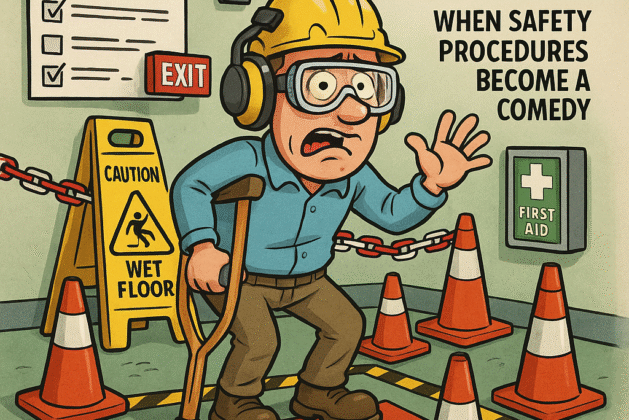
    Risk Assessment Overkill: When Safety Procedures Become a Comedy

    Safety at sea is sacred. As mariners, we know better than anyone that cutting corners can cost lives. Hazard identification, risk assessments, and proper procedures are the backbone of our industry—when applied correctly. 

    But somewhere along the way, common sense jumped overboard, and we’ve been left drowning in paperwork for even the simplest tasks.

    From Necessary to Nonsense: The Sinking of Practical Safety

    There was a time when Permit-to-Work (PTW), Job Safety Analysis (JSA), Risk Assessment (RA) and Toolbox Talks were reserved for genuinely high-risk operations:

    • Hot work near fuel tanks
    • Enclosed space entry
    • Working aloft in heavy weather
    • Handling hazardous cargo

    These were situations where a single mistake could mean disaster. The paperwork had a purpose—it forced us to stop, think, and mitigate real dangers.

    But today? We’re asked to fill out 10-page risk assessments for jobs like:

    • Changing a light bulb in the mess room (Hazard: “Potential electric shock if bulb is not switched off.” Control: “Ensure bulb is switched off before replacement.”)
    • Carrying a box of paperwork to the bridge (Hazard: “Muscle strain if lifting improperly.” Control: “Use correct lifting technique.”)
    • Plugging in a laptop (Hazard: “Tripping over cables.” Control: “Secure cables properly.”)

    At what point did we decide that professional seafarers—who navigate storms, engine failures, and piracy threats—need a written procedure to remind them not to trip over a power cord?

    The Real Danger: Safety Fatigue

    This over-the-top bureaucracy isn’t just annoying—it’s counterproductive. Here’s why:

    1. It Wastes Time – Officers spend more time filling out forms than actually managing risks.
    2. It Breeds Complacency – When every task requires the same level of paperwork, crews stop taking the real hazards seriously.
    3. It Undermines Authority – An electricalofficer shouldn’t need a checklist to know that working on live electrical systems is dangerous.

    Worst of all, it turns safety into a joke. 

    When crews see a JSA for “using a ladder to access the storeroom,” they start rolling their eyes at all safety procedures—even the critical ones.

    Who’s to Blame? The “Zero Harm” Myth

    The root of this madness isn’t the ship’s crew—it’s shore-based management, auditors, and insurance companies who’ve never spent a night on a rolling deck but insist on “100% compliance.” They’ve turned safety into a box-ticking exercise, where the goal isn’t preventing accidents but avoiding liability.

    How Do We Fix This?

    1. Bring Back Common Sense – Not every task needs a JSA. Trust experienced mariners to assess risks on the spot.
    2. Focus on Real Hazards – Reserve detailed assessments for high-risk operations (enclosed spaces, hot work, heavy lifts).
    3. Simplify the Process – A 5-minute toolbox talk is often more effective than a 10-page form.
    4. Push Back Against Shore Bureaucracy – Senior officers should challenge unnecessary paperwork instead of blindly enforcing it.

    Conclusion: Safety Should Be Smart, Not Stupid

    We don’t need more paperwork—we need better judgment. Risk assessments are vital when used correctly, but drowning crews in pointless forms doesn’t make anyone safer. It’s time to cut the nonsense and get back to real safety at sea.

    What’s the most ridiculous risk assessment you’ve seen onboard?

    Share your stories in the comments—or better yet, contribute to Shippys.org and let’s bring sanity back to maritime safety!

    #MaritimeSafety #CommonSense #RiskAssessment #MerchantNavy #StopThePaperwork


  • New Crew Onboard, Show Patience Not Judgment

    New Crew Onboard, Show Patience Not Judgment

    Change is inevitable, especially in the dynamic environment of shipboard operations. When a seasoned, efficient crew member signs off and a new one joins, comparisons are bound to happen. The old guy knew every tool’s location, every shortcut in the maintenance routine, and every trick to get things done swiftly. The new guy? He’s still finding his footing, learning the ropes, and making mistakes.

    It’s easy to shout, criticize, or even laugh at his errors. But is that the right approach?

    Experience Comes with Time

    The old crew member wasn’t born with all that knowledge. He learned over months (or years) of working on the same ship. He made mistakes, asked questions, and gradually became the efficient professional you remember. The new guy deserves the same opportunity.

    Attitude Over Instant Skill

    What matters most is not how fast he works on day one, but whether he has the right attitude—willingness to learn, work hard, and improve. Skills can be taught, but a bad attitude is far harder to fix. If he’s eager and committed, he’ll get there.

    The Hare and the Tortoise: A Lesson in Leadership

    Not everyone is a hare—fast, sharp, and quick to adapt. Some are tortoises—steady, persistent, and thorough. The hare may sprint ahead, but the tortoise brings reliability, attention to detail, and resilience. A good leader knows how to utilize both.

    Mocking or pressuring the new guy only breaks his confidence. Instead:

    • Guide him – Show him where tools are, explain procedures clearly.
    • Support him – Let him know mistakes are part of learning.
    • Be patient – Speed will come with familiarity.
    • Encourage him – A little confidence goes a long way.

    Final Thought: Remember Your First Day

    Before you judge, think back to your first days onboard. Were you perfect? Did you know everything? Treat the new guy the way you’d want to be treated—with patience, respect, and mentorship.

    In the end, a strong team isn’t built by tearing people down but by lifting them up. The tortoise may be slow today, but with the right support, he’ll cross the finish line—reliable, skilled, and an asset to the crew.

    Be the leader who nurtures, not the one who discourages.


  • The Forgotten Human Element: Why Timely Sign-Offs Should Be Treated as Critical Operations

    The Forgotten Human Element: Why Timely Sign-Offs Should Be Treated as Critical Operations

    Every time a seafarer’s sign-off gets delayed, it’s not just a logistical hiccup—it’s a broken promise. A promise that they will return home on time, attend their child’s birthday, be with an ailing parent, or simply rest after months of exhausting work. Yet, time and again, we hear the same excuse: 

    “We’ll sign you off in the next port.”

    Why does this keep happening? And why is it so hard for offices to treat crew changes with the urgency they deserve?

    “Next Port” Is Not a Solution—It’s an Excuse

    When a seafarer submits a sign-off request due to exhaustion, family emergencies, or contractual obligations, the response should be immediate action—not procrastination.

    • If you can pressure crews to follow procedures flawlessly, why can’t you ensure their sign-offs happen just as efficiently?
    • If you can find mistakes in their work, why can’t you foresee and prevent delays in crew changes?

    Offices have highly qualified, well-paid staff—so why do we keep seeing the same systemic failures?

    The Human Cost of Delayed Sign-Offs

    A delayed sign-off isn’t just an inconvenience—it’s emotional distress for the seafarer and their family.

    • Missed milestones – Birthdays, anniversaries, graduations, and even funerals.
    • Mental exhaustion – Prolonged time at sea leads to burnout, affecting performance and safety.
    • Family strain – Spouses, children, and parents wait anxiously, only to be told “maybe next time.”

    Would shore-based employees accept such delays in their own lives? If an office worker’s leave was repeatedly postponed, there would be outrage. Yet, seafarers are expected to accept it as “part of the job.”

    Sign-Offs Should Be Treated as Critical Operations

    If offices can prepare risk assessments and safety protocols for cargo operations, why not for crew changes?

    • Plan ahead – Know vessel schedules, visa requirements, and flight availability in advance.
    • No more last-minute chaos – If a ship is heading to a sign-off port, replacements should already be arranged.
    • Accountability – If delays happen, there should be transparent explanations, not vague promises.

    A Call for Responsibility & Change

    Shipping companies pride themselves on efficiency and safety—yet crew welfare remains an afterthought.

    • Offices must stop treating sign-offs as “low priority.”
    • Managers should imagine themselves in the seafarer’s position—stranded at sea, missing life events, with no certainty.
    • Seafarers are not robots—they deserve respect, timely relief, and the dignity of keeping their word to their families.

    Final Thought

    If a company can ensure cargo reaches its destination on time, why can’t it ensure the same for its human crew?

    It’s time to stop saying “next port” and start saying “this port.” Because for every delayed sign-off, there’s a seafarer—and a family—paying the price.

    #FairTreatmentAtSea #TimelySignOffs #CrewWelfareMatters


    What are your experiences with sign-offs? Have you faced unnecessary delays? Share your

  • Zero Alcohol Policy at Sea: Fair Rule or Collective Punishment?

    Zero Alcohol Policy at Sea: Fair Rule or Collective Punishment?

    The life of a seafarer is unlike any other. Months away from home, limited access to the internet, long working hours, and the emotional toll of isolation all add up to an incredibly challenging lifestyle. In such a tough environment, even small things—like having a quiet drink with fellow crew members after a long shift—once provided some sense of normalcy and relief.

    But in today’s shipping industry, those moments are gone. A growing number of companies have adopted zero alcohol policies. No drinking onboard. No returning to the vessel after shore leave with even a trace of alcohol. And this is happening not because everyone was drinking irresponsibly—but because one or two people did.

    One Person’s Mistake, Everyone’s Punishment

    This is the heart of the frustration felt by many at sea: “Why should I suffer for someone else’s actions?”

    Let’s put this into perspective. Imagine if road safety officers applied the same logic. A few drivers caused accidents due to reckless behavior, so in response, authorities banned all vehicles from the road—even from responsible drivers. It would be outrageous, right? Yet, that’s how many seafarers feel today.

    Unfortunately, this is how it works at sea. One seafarer causes a scene while drunk or creates a safety concern, and instead of dealing with that individual, the company chooses to enforce a total ban. From a management point of view, it’s the “safest option.” From a seafarer’s point of view, it feels like collective punishment.

    The Missing Human Side

    A ship isn’t just a workplace—it’s also a home, a social environment, and a mental battleground. Many seafarers struggle with loneliness, depression, and anxiety. In the past, socializing over a drink after duty hours helped relieve some of that tension.

    Now, even that is off-limits—without any proper alternative support. No structured recreational programs. No real-time mental health resources. Just more rules.

    The message seems to be: “Trust no one, treat everyone as a potential risk.”

    Safety Is Crucial—But So Is Balance

    Let’s be clear—safety must always come first. No one is arguing in favor of drunken behavior at sea. But the issue is how it’s being handled.

    Instead of a zero-tolerance blanket policy, could there be a more balanced and respectful approach?

    • Allow limited and monitored consumption during off-duty hours for those who wish to drink responsibly.
    • Set clear boundaries: zero alcohol while on duty or within a certain number of hours before a shift.
    • Focus on education and accountability, not punishment.
    • Provide better mental health support, wellness checks, and recreational activities onboard.
    • Differentiate between irresponsible drinking and minor consumption during shore leave. Returning after having a casual beer with dinner shouldn’t be treated like a criminal offense if behavior and sobriety are intact.

    A Call for Empathy

    Policies should be designed not only to reduce risk, but also to respect the dignity and well-being of those who follow them. Seafarers are professionals, not children. Trust, support, and understanding must accompany rules and regulations.

    Yes, mistakes have been made. But the answer isn’t to strip away all freedom—it’s to handle those mistakes responsibly and fairly, while maintaining the mental and emotional health of the crew.

    After all, a mentally strong, respected, and trusted crew is far safer than a resentful one under rigid control.

  • Egypt from a Seafarer’s Lens: Ancient Wonders and Modern-Day Hurdles

    Egypt from a Seafarer’s Lens: Ancient Wonders and Modern-Day Hurdles

    Egypt—the land of pyramids, pharaohs, and timeless wonders. For many, it’s a bucket-list destination filled with history and mystery. But for seafarers calling at Egyptian ports, the experience is often far from the romantic images you see in travel brochures. Instead, it’s a world of corruption, bargaining, and relentless demands, where every visit feels like a delicate dance of negotiation.

    Here’s what a typical call at an Egyptian port looks like for seafarers:

    🛳️ The Port Experience: Where Cigarettes Speak Louder Than Words

    From the moment your ship arrives, you’ll find yourself dealing with a variety of officials—each with their own expectations of “gifts.”

    • The Pilot: It starts with the pilot. They won’t board your vessel without a demand for cigarettes—often 10 cartons, but after some bargaining, you might get away with 6. It’s not about safety or procedures; it’s about the unspoken rules of the port.
    • Port State Control (PSC): Want a smooth inspection? Be prepared to pay $600 cash and hand over a few cartons of cigarettes. That’s the “fee” for avoiding unnecessary trouble.
    • Quarantine Officers: They’re no different. Quarantine inspections become another transaction, with cigarettes and small cash gifts expected to move things along quickly.
    • Customs Officials: If you thought customs would be any different, think again. Expect demands for cigarettes, chocolates, or small bribes in exchange for a hassle-free clearance. They might also hint at “extra charges” if you want to avoid unnecessary delays or issues.
    • Security Guards Onboard: The guards stationed on your vessel often feel like permanent “guests.” They’ll casually ask for cigarette cartons, snacks, or small items throughout their watch.

    The bottom line: Every authority figure—from pilot to PSC, quarantine, customs, and even security—views seafarers as easy targets for small bribes and cigarettes. It’s an exhausting, unspoken system that many feel powerless to change.

    🛍️ The Floating Market Onboard: Businessmen and Bargains

    Adding to the chaos, local businessmen often come aboard, turning your ship into a floating bazaar. They bring:

    • Souvenirs: Mini pyramids, papyrus art, pharaoh statues.
    • Gift Items: Jewelry, keychains, perfumes, and trinkets.
    • Dry Fruits and Spices: Dates, nuts, saffron, and more—often at inflated prices.

    Bargaining is essential here, too.
    Don’t accept the first price—negotiate hard, as prices can often be slashed by 50% or more. If you don’t like the deal, walk away. They’ll usually follow you with a better offer.

    “Please note that suppliers and technicians typically arrive late in the evening, often around 9:00 PM or 10:00 PM. In some cases, they may come as late as 11:00 PM, so please be prepared for their arrival at these hours.”

    🏛️ The Pyramids Tour: Worth It, But Watch Your Wallet

    Most agents offer a full-day tour package covering the Pyramids of Giza, the Egyptian Museum, and shopping.

    • The typical rate is around $140 per person, which includes transport, a guide, and lunch.
    • The catch? The shopping stops. These are often pre-arranged with specific shops where prices are sky-high.
      • Don’t feel obligated to buy anything, and if you do, bargain hard. Prices can be negotiated down by half or more.

    🚩 Final Thoughts: Be Prepared, Be Wary

    Egypt is a land of contrasts. The pyramids inspire awe, the mummies spark curiosity, but the people you meet at the port often seem more interested in your wallet than in sharing their culture.

    For seafarers, the key takeaway is:

    • Expect demands for cigarettes and cash at every step.
    • Be ready to negotiate—whether it’s for a pilot, a souvenir, or a pack of dates.
    • And most importantly, enjoy the history, but keep your guard up.

    Egypt’s magic is undeniable, but in the world of seafarers, it comes with a price tag.