Blog

  • China Port Visa for Seafarers – A Practical Guide (Shanghai Crew Change)

    China Port Visa for Seafarers – A Practical Guide (Shanghai Crew Change)

    If you’re a seafarer joining a vessel in China, the visa process is likely your biggest concern. I recently joined a ship through Shanghai, and while official information is available online, practical, step-by-step advice from someone who’s actually done it is much harder to find. This blog shares my personal experience—including a few unexpected twists—to help other crew members prepare for a smooth crew change in China.

    Before You Travel – What My Office Told Me

    My company and their travel desk were upfront with me before departure: they informed me clearly that I would need to pay 210 Chinese Yuan for the port visa upon arrival at Shanghai airport.

    However, there was a catch—Chinese Yuan was not available in my hometown, Kozhikode. No matter where I tried, I couldn’t get hold of any RMB before leaving.

    What I did:

    I luckily managed to exchange currency at Bangalore airport during my connecting flight. That small window saved me a lot of trouble later.

    👉 **My advice:

    If Yuan is not available in your city, plan to exchange it at a major international airport in India (like Bangalore, Delhi, or Mumbai) before your international leg. Carry at least 500 RMB to cover visa fees, food, and emergencies.

    Documents You Must Carry

    Before you even think about boarding your flight, make sure you have all documents ready—not just for China, but for **Indian immigration first**.

    For Indian Immigration (Departure)

    – E- Migrate from mmd

    – CDC (Continuous Discharge Certificate)

    – OK to Board from your company

    – Passport

    – Joining letter

    Keep these in your hand baggage. Indian immigration officers will ask for them before letting you depart.

    For China Port Visa

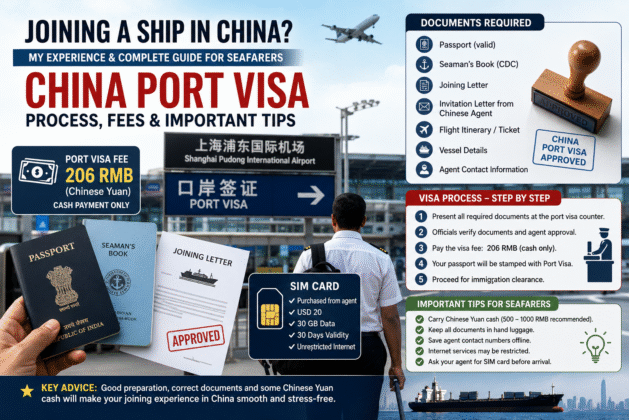
    – Valid passport

    – Seaman’s Book (CDC)

    – Joining letter from your company

    – Port Visa Notification

    – Invitation letter from the Chinese agent/shipping company

    – Flight tickets and itinerary

    – Local agent contact details

    – Passport-size photo (one attached to application form, plus a spare)

    – Printed and digital copies of everything

    Arriving at Shanghai Pudong Airport – Don’t Go Straight to Immigration!

    This is the most important part of this blog, and it’s where many seafarers could make a mistake.

    **Do NOT go directly to the immigration counter after you get off the plane.**

    Instead, look for the **Port Visa Office**. It is usually located before the main immigration hall. At Shanghai Pudong Airport, the signage is visible, but if you’re unsure, ask airport staff for “Port Visa” or “Visa on Arrival for Seafarers.”

    Step-by-Step Port Visa Process at Shanghai Airport

    1. **Locate the Port Visa Office** – It’s separate from the regular immigration counters.

    2. **Submit your documents** – You will need to provide:

       – Port visa application form (available at the counter)

       – One passport-size photo attached to the form

       – Your passport

       – Joining letter

       – Invitation letter

       – CDC

    3. **Get your photo taken** – In my case, I was asked to get a fresh photo from a **nearby photo studio cubicle** inside the airport. These are located close to the port visa office. Don’t worry—it’s quick and straightforward. Keep some small change handy just in case.

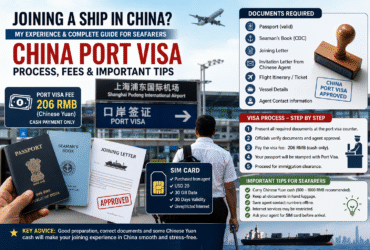
    4. **Pay the visa fee** – The fee was **206 Chinese Yuan**, exactly as my company had told me. Payment is accepted only in **cash in Chinese Yuan**. No international cards, no foreign currency.

    5. **Receive your visa sticker** – Once payment is made and documents are verified, they will stamp a **port visa sticker** into your passport. Only after this step should you proceed to the regular immigration counter.

    How Long Did It Take?

    The entire port visa process took about 30–40 minutes, including getting the photo taken and waiting for processing. It was orderly and professional. The key is to stay patient and keep all documents ready.

    Internet and SIM Card in China

    I didn’t buy a SIM card at the airport. Instead, I arranged one through the ship’s agent:

    – **30 GB data**

    – **30 days validity**

    – **Unrestricted access**

    – **Cost: USD 20** If possible, ask your agent before arrival whether they can arrange a SIM card. It saves a lot of hassle.

    Summary of Practical Tips for Seafarers Joining in China

    | Before leaving India | Exchange Yuan at a major airport (Bangalore, Delhi, or Mumbai) if not available in your hometown |

    | At Indian immigration | Keep Emigration Certificate, CDC, OK to Board, and passport ready |

    | At Shanghai airport | Go to **Port Visa Office first** – NOT directly to immigration |

    | Documents for port visa | Application form + photo + passport + joining letter + invitation letter + CDC |

    | Photo | May need to take one at a nearby photo studio cubicle |

    | Visa fee | **206 RMB cash only** (carry 500–1000 RMB to be safe) | | After visa sticker | Then proceed to regular immigration |

    Final Thoughts

    My experience joining a vessel through Shanghai was ultimately smooth, but only because I had been warned in advance about the need for Chinese Yuan and the correct procedure at the airport.

    The two biggest lessons from my trip:

    1. **Carry Chinese Yuan in cash before you land** – My company told me 210 RMB, and that’s exactly what I paid. But cards are not accepted, so cash is essential.

    2. **Do not go directly to immigration** – Find the Port Visa Office first and get your visa sticker. Going to immigration without it will cause delays and confusion.

    For any seafarer joining a ship in China for the first time, a little preparation—local currency, documents in order, and knowing where to go at the airport—makes the entire crew change experience much less stressful.

    *Author’s Note: This article is based on my personal experience joining a vessel through Shanghai in 2026. Immigration requirements, fees, and procedures may change. Always verify the latest requirements with your company and local agent before traveling.*.

  • Complete Career Paths in Merchant Navy (2026 Guide for Students)
    Complete Career Paths in Merchant Navy (2026 Guide for Students)


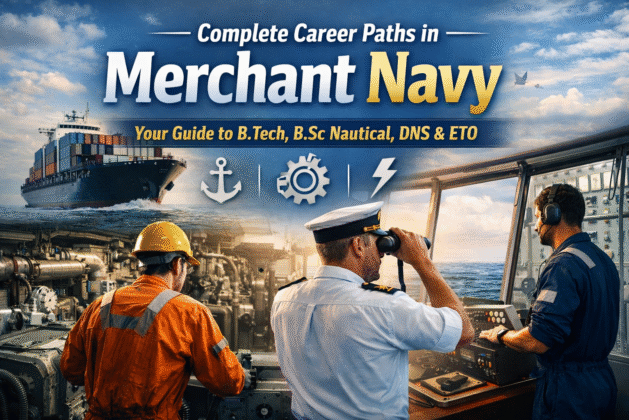
    The Merchant Navy offers multiple career paths, not just one. Many students are confused about which course to choose—B.Tech Marine Engineering, B.Sc Nautical Science, DNS, ETO, or M.Sc Nautical Science.

    This guide explains:
    ✔ All career options
    ✔ Eligibility & duration
    ✔ Career growth
    ✔ Which path is best for you

    ⚓ Main Career Branches in Merchant Navy

    There are 3 major departments onboard a ship:

    1. Deck Department

    • Navigation of ship
    • Route planning
    • Safety & cargo operations

    👉 Roles: Deck Cadet → Officer → Captain


    2. Engine Department

    • Ship engines & machinery
    • Maintenance & repairs

    👉 Roles: Engine Cadet → Engineer → Chief Engineer


    3. Electrical Department

    • Electrical & electronic systems
    • Automation & control

    👉 Role: Electro-Technical Officer (ETO)


    🎓 Entry Routes Explained (Step-by-Step)


    1️⃣ B.Tech Marine Engineering

    📌 Details:

    • Duration: 4 years
    • Entry: IMU-CET / institute exams
    • Focus: Technical (engines, systems)

    🎯 Career Path:

    Engine Cadet → 4th Engineer → 3rd Engineer → 2nd Engineer → Chief Engineer

    👉 Best for students who like machines & technical work

    👉 Prepare here: IMU-CET Course


    📌 Details

    • Duration: 3 years
    • Focus: Navigation & ship handling

    🎯 Career Path:

    Deck Cadet → 3rd Officer → 2nd Officer → Chief Officer → Captain

    👉 Best for leadership & navigation roles


    3️⃣ Diploma in Nautical Science (DNS)

    4

    📌 Details:

    • Duration: 1 year + onboard training
    • Requires company sponsorship before joining

    ⚠️ Important Warning:

    • Most scams happen in DNS
    • Never pay agents for sponsorship

    🎯 Career Path:

    Same as B.Sc Nautical Science (Deck side)

    👉 Get started here for IMU CET and MSC marine online free exams. Some of the MCQS also have step by step explanation to get complete clarity on the question


    5️⃣ Electro-Technical Officer (ETO)

    4

    📌 Details:

    • For Electrical/Electronics students
    • Short duration courses

    🎯 Career Path:

    ETO → Senior ETO

    👉 High demand role in modern ships


    📊 Comparison Table

    CourseDurationEntry LevelDepartmentRisk Level
    B.Tech Marine Engg4 yrs10+2 PCMEngineLow
    B.Sc Nautical3 yrs10+2 PCMDeckLow
    DNS1 yr + sea10+2 PCMDeck⚠️ Medium
    M.Sc Nautical1–2 yrsGraduateDeckMedium
    ETO4–12 monthsElectrical EnggElectricalLow


    ⚠️ Reality Check (Must Read)
    Before choosing this career:

    • Onboard placement may take time
    • Work is physically demanding
    • Long time away from family
    • Salary is good—but not instant

    👉 Even sponsored candidates may wait months/years to join ship.


    🎯 Which Path Should YOU Choose?

    ✔ Choose B.Tech Marine Engineering if:

    • You like machines & engineering
    • Prefer stable route

    ✔ Choose B.Sc Nautical Science if:

    • You want to become Captain
    • Strong in leadership

    ✔ Choose DNS if:

    • You have sponsorship
    • Ready to take some risk

    ✔ Choose ETO if:

    • You are from electrical background
    • Want quicker entry

    ✔ Choose M.Sc Nautical if:

    • You are a graduate
    • Want fast-track entry

    🚀 Start Your Preparation Smartly

    Don’t waste money on:


    📢 Final Words

    Merchant Navy is a great career—but only if you choose the right path.

    ✔ Understand all options
    ✔ Avoid shortcuts
    ✔ Prepare on merit
    ✔ Take informed decisions

  • IMU-CET & B.Sc Nautical Science: Preparation Guide + Important Warnings for Aspirants
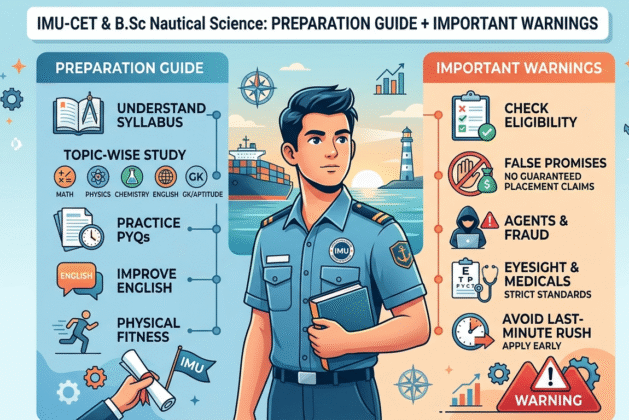
    IMU-CET & B.Sc Nautical Science: Preparation Guide + Important Warnings for Aspirants

    This article is based on real experiences of maritime aspirants and aims to protect students from misinformation.

    The maritime sector offers an exciting, challenging, and financially rewarding career. However, the gateway to this career—the IMU-CET (Indian Maritime University Common Entrance Test) and subsequent sponsorship exams—has become a breeding ground for exploitation.

    Every year, thousands of students are scammed out of lakhs of rupees by coaching centers making false promises and agents offering “guaranteed placements.”

    If you are an aspirant aiming for the upcoming IMU-CET, DNS (Diploma in Nautical Science), or B.Sc Nautical Science exams, this guide is your shield and your roadmap. Click here for complete career path in merchant navy


    Part 1: Crucial Warnings – Do NOT Fall Into These Traps

    Before you start studying, you must understand how to protect yourself. The shipping industry operates on strict merit and medical fitness. There are no shortcuts.

    Trap #1: The “Guaranteed Placement” Coaching Center

    The Scam: Institutes on social media advertise aggressively, claiming, “Join us, and we guarantee you a seat in a top college and placement in a top shipping company.” They charge exorbitant fees (often ₹50,000 to ₹1 Lakh+) for basic coaching.

    The Reality: NO COACHING INSTITUTE CAN GUARANTEE PLACEMENT OR SPONSORSHIP. Sponsorship is a contract between you and a shipping company based only on your performance in their written test and interview. The coaching center has zero influence over the company’s decision.

    Trap #2: Fraudulent Agents/Brokers

    The Scam: Someone contacts you (often claiming inside connections) and says, “Pay me ₹2 Lakhs (or more), and I will ensure you pass the IMU-CET and get sponsored by a major company.”

    The Reality: This is complete fraud. IMU-CET is a centralized, computer-based exam. No agent can alter the results. Furthermore, top shipping companies have strict anti-bribery policies. Paying an agent is the fastest way to get blacklisted from the industry and lose your money.

    Trap #3: The “Waitlist” Nightmare

    The Fact: Even if you pass the exam and get a sponsorship letter from a company, there can sometimes be a significant waiting period (months, or occasionally even a year) before you are called to join a ship for onboard training (DNS trainees). The Advice: Be prepared for this potential gap. Do not abandon other educational or skill-building opportunities while waiting. Ensure your passport and all documentation are ready.

    Trap #4: Ignoring Medical Standards

    The Fact: You can be the smartest student, but if you do not meet the strict medical standards set by the Directorate General of Shipping (DGS), you cannot join. Specifically, for Nautical Science, 6/6 eyesight (unaided) in both eyes is mandatory. The Advice: Before spending a single rupee on preparation, get a thorough medical checkup from a DGS-approved doctor to ensure you are fit.


    Part 2: How to Prepare for IMU-CET (for Free or Low Cost)

    You do not need to pay lakhs to prepare. The IMU-CET syllabus is primarily based on the 11th and 12th-grade curriculum (CBSE/ISC/State Boards).

    The Syllabus Breakdown

    The IMU-CET typically consists of 200 multiple-choice questions (MCQs) to be solved in 3 hours:

    • Physics (50 Qs): Focus on Mechanics, Thermodynamics, Optics, Electricity, and Magnetism (Class 11 & 12 level).
    • Chemistry (25 Qs): Focus on General Chemistry, Periodic Table, Chemical Bonding, and Basic Organic Chemistry (Class 11 & 12 level).
    • Mathematics (50 Qs): Focus on Calculus, Vectors, 3D Geometry, Algebra, and Trigonometry (Class 11 & 12 level).
    • English (25 Qs): Grammar, Vocabulary, Synonyms/Antonyms, Comprehension.
    • General Knowledge (25 Qs): Basic current affairs, sports, history, geography, and general science.
    • General Aptitude (25 Qs): Logical reasoning, data interpretation, verbal and non-verbal reasoning.

    Preparation Strategy (The Honest Way)

    1. Master Your Textbooks: Your 11th and 12th NCERT Physics, Chemistry, and Math books are your most important resources. Master the concepts and solve all the back-exercise problems.
    2. Use Free Online Resources:
      • Expon.in: This is an excellent, widely used website that offers free preparation material for IMU-CET, including mock tests, topic-wise study notes, and previous year question breakdowns. Highly recommended – Get started for free here.
      • YouTube: Search for topic-specific lectures (e.g., “Vector Algebra for JEE/CET”) from reputable channels like Physics Wallah, Unacademy, or Vedantu. The level required for IMU-CET is generally slightly easier than JEE Mains.
    3. Practice Previous Year Questions (PYQs): Solve as many past IMU-CET papers as you can find. This helps you understand the question pattern and time management.
    4. Work on Speed and Accuracy: 200 questions in 180 minutes means you have less than one minute per question. Practice solving simple problems quickly without a calculator.
    5. Focus on English & Aptitude: Many students excel in science but lose marks here. Read newspapers daily for GK and English. Use logical reasoning books (like R.S. Aggarwal) for aptitude.

    Part 3: Reputable Institutes for B.Sc Nautical Science/DNS

    While you shouldn’t pay fraud institutes for placement, you do need to join a DGS-approved college for the actual training. The best colleges are those often visited by top shipping companies for placement (sponsorship).

    Top-Tier DGS-Approved Institutes (Aspirational)

    1. Tolani Maritime Institute (TMI), Pune: Widely considered one of the best private maritime institutes.
      • Course: B.Sc Nautical Science / DNS
      • Approx Fees: ₹18-20 Lakhs (for the 3-year B.Sc course)
      • Placement Record: Excellent.
    2. Samundra Institute of Maritime Studies (SIMS), Lonavala: Established by Executive Ship Management (ESM).
      • Course: DNS (primarily)
      • Approx Fees: ₹6-8 Lakhs (for the 1-year DNS course)
      • Placement Record: Very high (mostly with ESM).
    3. Anglo-Eastern Maritime Academy (AEMA), Karjat: Owned by the Anglo-Eastern Univan Group.
      • Course: DNS
      • Approx Fees: ₹6-8 Lakhs (for the 1-year DNS course)
      • Placement Record: Nearly 100% (within Anglo-Eastern).
    4. Great Eastern Institute of Maritime Studies (GEIMS), Lonavala: Owned by Great Eastern Shipping Company.
      • Course: DNS / GME
      • Approx Fees: ₹6-7 Lakhs (for the 1-year DNS course)
      • Placement Record: Very high (mostly with Great Eastern).
    5. Indian Maritime University (IMU) Campuses (Chennai, Kolkata, Navi Mumbai, Kochi): The central university itself.
      • Course: B.Sc Nautical Science
      • Approx Fees: ₹2.25 Lakhs per year (₹6.75 Lakhs total) – Significantly lower than private colleges.
      • Placement Record: Good, but requires students to actively participate in placement drives.

    The Sponsorship Process (How It Really Works)

    This is the legitimate path to get into shipping:

    1. Apply for IMU-CET: Fill out the form on the official IMU website.
    2. Apply to Shipping Companies: Simultaneously, look for sponsorship advertisements from major companies (Anglo-Eastern, Fleet Management, Synergy, MSC, Great Eastern, NYK, etc.). Apply on their official websites.
    3. Company Selection Process: If shortlisted, you will undergo:
      • Online Written Test (Aptitude, Psychometric, Science)
      • Interview (Technical & HR)
      • DGS Medical Examination
    4. Get sponsorship Letter: If you clear all stages, the company will give you a “Sponsorship Letter.”
    5. Clear IMU-CET: You must secure a decent rank in IMU-CET to validate your sponsorship.
    6. Join College: With your sponsorship letter and IMU-CET rank, you join the DGS-approved college specified by your sponsoring company.

    Below are the verified, high-value links for aspirants to the IMU-CET 2026, MSC Shipmanagement, and other top institutes.


    1. Official Government & Exam Portals

    These are the only official sources for exam registration and checking the legitimacy of any maritime course.


    2. Top Reputed Institutes (Direct Links)

    These institutes are known for their high standards and strong placement ties with global shipping lines.

    InstituteLocationOfficial Website
    Tolani Maritime Institute (TMI)Punetmi.tolani.edu
    Samundra Institute (SIMS)Lonavalasamundra.com
    Anglo-Eastern Maritime AcademyKarjatmaritimetraining.angloeastern.com
    Great Eastern Institute (GEIMS)Lonavalageims.in
    Training Ship RahamanMumbaitsrahaman.org
    Hindustan Institute (HIMT)Chennaihimtcollege.com

    3. Shipping Company Career Pages (For Sponsorship)

    Students should apply directly to these companies for sponsorship. MSC is particularly active right now.


    4. Free Preparation Resources

    Advise students to use these instead of paying for expensive, unverified coaching.

    The Fee Reality Check:

    • IMU Government Campuses: ~₹2.25 Lakhs/year. Total 3-year B.Sc: ~₹7 Lakhs.
    • Top Private Institutes (TMI/SIMS): Total 3-year B.Sc: ₹15–20 Lakhs.
    • DNS (1-year course): Total: ₹5–7 Lakhs.

    Warning: If an “agent” or “small institute” asks for an “Entry Fee” or “Placement Charge” of ₹3–5 Lakhs separately from the college fees, it is a 100% scam.

    Final Message to Aspirants

    A career at sea is fantastic, but the entry must be on merit. If any institute or individual asks you for “extra money” to guarantee a job, RUN.

    Prepare hard, use the free resources available like Expon.in, master your 12th-standard science, and apply directly to reputable shipping companies. The right path might be harder, but it is the only safe and honest path.

    Good luck!


  • Seafarers Now Have Dedicated Immigration Counters at Indian Airports
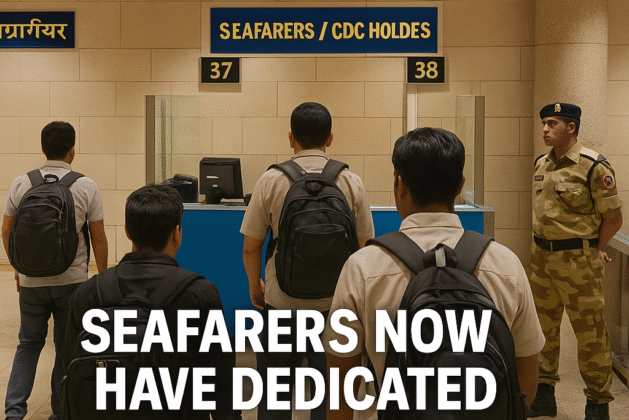
    Seafarers Now Have Dedicated Immigration Counters at Indian Airports


    A Welcome Change for India’s Maritime Workforce

    Good news for Indian seafarers! Immigration authorities at several major airports across India have now introduced dedicated immigration counters exclusively for seafarers and CDC holders. This move aims to make the travel experience smoother and faster for maritime professionals who often face tight joining or sign-off schedules.

    Why This Change Matters

    Seafarers are the backbone of global trade, spending months away from home to keep the world’s supply chains running. Yet, many have long faced delays at airports — standing in long queues at immigration after exhausting journeys or before critical ship-joining deadlines.

    Recognizing this, Indian airport and immigration authorities have rolled out exclusive “Seafarers / CDC Holders” counters at select airports, ensuring quicker processing and specialized handling of documentation related to crew movement.

    Where You’ll Find These Counters

    These dedicated counters have already been spotted at:

    • Mumbai International Airport (CSMIA) – Terminal 2 now features a separate section for “Seafarers / CDC Holders.”
    • Chennai International Airport – Seafarer queues available at the departure immigration area.
    • Cochin International Airport – Similar dedicated arrangements for crew members joining vessels.
    • Delhi IGI Airport (Terminal 3) – Special lane or counter for CDC holders during high-traffic hours.
    • Kolkata and Goa Airports – Reported to have designated lines for seafarers in certain shifts.

    At most airports, these counters are located at the last few booths in the immigration area, clearly marked with signboards reading “Seafarers / CDC Holders.”

    What You’ll Need

    To use the dedicated counter, seafarers should keep the following documents ready:

    • Passport
    • CDC (Continuous Discharge Certificate)
    • Company Letter of Employment / Joining Instructions
    • Valid Visa and Travel Ticket
    • Boarding Pass

    The Impact

    This change has been welcomed widely within the maritime community. Not only does it save valuable time, but it also acknowledges the vital contribution of Indian seafarers to the nation’s economy and global trade.

    By simplifying the immigration process, authorities are taking a step toward better welfare and recognition of Indian seafarers, who number over 250,000 globally and continue to make India one of the world’s top seafarer-supplying nations.

    Final Thoughts

    A small step, but a meaningful one — separate immigration counters for seafarers reflect growing respect and awareness for the maritime profession in India. It’s a positive signal that authorities are listening to the community’s needs and working to ease their travel experience.

    So next time you’re at the airport, look for the “Seafarers / CDC Holders” sign — and sail through immigration with ease!


  • IMU Online MBA for CoC Holders: The Ultimate Career Upgrade for Seafarers
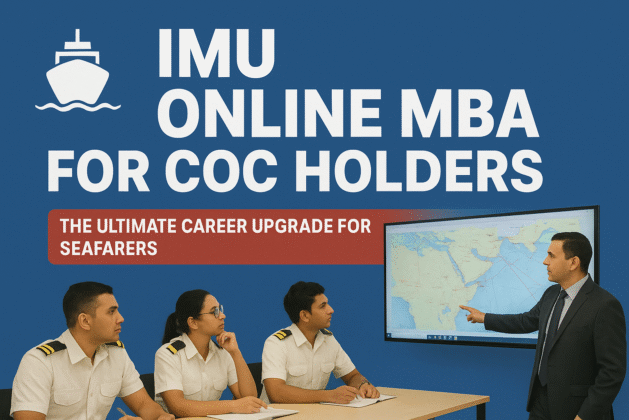
    IMU Online MBA for CoC Holders: The Ultimate Career Upgrade for Seafarers


    For years, Indian seafarers have looked for ways to transition from life at sea to leadership roles ashore — in shipping, logistics, and port management.
    Now, with the Indian Maritime University (IMU) offering an Online MBA in Maritime Management for CoC holders, that goal is more achievable than ever.

    If you’re a Chief Officer, 2nd Engineer, or anyone holding a valid Certificate of Competency (CoC), this program is designed just for you.


    ⚓ What Is the IMU Online MBA in Maritime Management?

    The IMU Online MBA (Maritime Management) is a two-year postgraduate degree tailored for working seafarers who already hold a Certificate of Competency (CoC) issued by the Directorate General of Shipping, Government of India.

    Unlike traditional full-time programs, this course allows you to:

    • Continue your sea service or offshore job, and
    • Earn an MBA degree recognized by a Central University (IMU)

    All without leaving your sailing schedule.


    🎯 Key Features of the Program

    • 💻 Completely Online – Attend classes and exams from anywhere in the world.
    • Flexible Learning – Designed to fit seafarers’ erratic sailing schedules.
    • ⚙️ Maritime-Focused Curriculum – Combines management studies with shipping, logistics, and port operations.
    • 🎓 UGC-Recognized Degree – Awarded by Indian Maritime University, a Government of India institution.
    • 🤝 Industry-Oriented – Focus on practical leadership, maritime law, finance, and logistics management.

    🧭 Who Can Apply?

    This course is exclusively for licensed seafarers who hold:

    • A valid Certificate of Competency (CoC) issued by DG Shipping, India.
    • Minimum academic qualification as prescribed in the IMU notification (usually 10+2 and CoC).

    Note: A CDC alone is not sufficient — you must possess a valid CoC (Deck or Engine).


    🎓 Course Duration & Structure

    • Duration: 2 years (4 semesters)
    • Mode: Online learning via IMU’s e-learning platform
    • Assessment: Online assignments, projects, and exams

    Subjects typically include:

    • Maritime Business & Law
    • Shipping Finance & Economics
    • Logistics & Supply Chain Management
    • Strategic Management
    • Port Operations & Management
    • International Trade & Transport Systems

    💰 Fees (Approximate)

    ParticularAmount (INR)
    Tuition Fees (Per Year)₹1.75 – ₹2.0 lakh
    Total Program Cost (2 Years)₹3.5 – ₹4.0 lakh

    (May vary slightly depending on the academic year and IMU’s official circular.)


    🧾 Admission Process

    1. Visit the official IMU website – imu.edu.in
    2. Check the latest notification under “Admissions → Online Programmes”
    3. Fill out the online application form for the MBA (Maritime Management) – for CoC Holders
    4. Upload CoC and educational documents
    5. Pay the application fee and await confirmation

    Good news:
    👉 No IMU-CET (Entrance Test) is required for this program.
    Admissions are based on eligibility and seat availability.


    🌍 Career Scope After MBA

    Once you complete the IMU MBA, new opportunities open up ashore — where your sea experience meets management expertise.

    Typical roles include:

    • Fleet Personnel / Technical Superintendent
    • Port Operations or Terminal Manager
    • Ship Management Executive
    • Chartering / Commercial Operations Manager
    • Marine Surveyor / Consultant
    • Maritime Training Faculty
    • Supply Chain & Logistics Executive

    Your CoC plus MBA combination gives you an edge for shore-based managerial roles across shipping companies, logistics firms, port authorities, and marine consultancies.


    🧠 Why CoC Holders Should Consider This MBA

    1. Advance Career Beyond Sea Life – Move into leadership positions ashore.
    2. Gain Management Skills – Learn finance, HR, strategy, and business analytics.
    3. Stay Relevant – As automation and AI reshape maritime operations.
    4. Government-Recognized Degree – Adds academic weight to your professional CoC.
    5. Work While You Study – Ideal for officers who can’t take long study breaks.

    ⚠️ Important Notes

    • The program is for CoC holders only, not CDC holders.
    • Always verify eligibility, schedule, and fees via official IMU notifications — updates vary yearly.
    • Having a valid CoC at the time of admission is mandatory.

    📅 Admission Cycle

    Typically, IMU opens applications for the Online MBA in Maritime Management once a year (around March–April).
    Keep checking the “Latest Updates” section on IMU’s website:
    👉 https://www.imu.edu.in


    🧩 Final Thoughts

    For Indian seafarers ready to steer their careers toward the shore, the IMU Online MBA for CoC holders is the perfect bridge between maritime experience and managerial excellence.

    It’s flexible, industry-focused, and backed by the credibility of India’s leading maritime university.

    If you’ve earned your CoC, this is your next big step — from captaining ships to managing shipping companies.


  • EV vs ICE: Which Vehicle Should Seafarers in India Choose?

    EV vs ICE: Which Vehicle Should Seafarers in India Choose?


    Life as a seafarer is unique. You spend months navigating the oceans, and when you finally hit dry land, your time is precious. Every moment with family and friends counts. So, when it comes to choosing a car that sits idle for half the year and then goes on a whirlwind of adventures, the age-old question—Electric Vehicle (EV) or Internal Combustion Engine (ICE)?—needs a special lens.

    This isn’t just about mileage or price; it’s about a lifestyle. Let’s dive into which vehicle truly deserves a spot in your driveway.

    Why Your Decision as a Seafarer is Different

    Before we compare specs, let’s understand your unique needs:

    • Long-Term Parking: Your car will be parked, untouched, for 4-9 months at a time. This is the most critical factor.
    • Intermittent, High-Intensity Use: When you’re home, the car isn’t just for groceries; it’s for road trips, family vacations, and making up for lost time.
    • Financial Pattern: You have a high earning potential during contracts, making strategic investments smart.
    • Value of Time: Minimizing hassles like fuel stops and service center visits is a premium benefit.

    The Showdown: EV vs. ICE

    Let’s break it down factor by factor.

    1. Running Cost: The Clear Winner

    • EV: ₹1.5 – ₹2.5 / km (if charged at home). Even with fast charging, it’s around ₹3.5 – ₹5 / km. The savings are monumental.
    • ICE: ₹8 – ₹12 / km (for petrol/diesel). Fuel bills add up quickly during your intense home periods.
    • Verdict: 🏆 EV. The cost advantage for daily driving is simply unbeatable.

    2. Maintenance: The Silent Benefit

    • EV: Radically simple. No engine oil, air filters, or spark plugs. Regenerative braking also means less wear on brake pads. You sign off for a contract and have virtually no maintenance worries.
    • ICE: Requires regular and scheduled servicing. Leaving it parked for months can lead to 12V battery drainage and fuel degradation, potentially requiring service upon your return.
    • Verdict: 🏆 EV. The peace of mind of having a car that needs almost no maintenance while you’re at sea is a huge advantage.

    3. Long-Term Storage: The EV Edge (With One Simple Step)

    • EV: The ideal garage queen, with one easy rule. The key is to store it with the high-voltage battery charged between 40-60%. This simple step minimizes battery degradation while parked. There are no stale fluids or complex mechanical systems to worry about.
    • ICE: Requires more preparation. The 12V battery may drain completely, fuel can deteriorate, and internal engine components can be subject to corrosion without periodic use.
    • Verdict: 🏆 EV. With basic battery care, it is objectively better suited for the long periods of inactivity inherent to your job.

    4. Charging & Refueling Infrastructure

    • EV: Growing at an incredible pace. As of August 2025, India has over 29,700 public charging stations, and this number is growing every month. While home charging is your primary method, this vast network makes inter-city travel increasingly feasible.
    • ICE: The proven champion for freedom. A 5-minute refuel is available anywhere in the country, offering unmatched flexibility for the most remote journeys.
    • Verdict: 🏆 Tie. For daily use, home charging wins. For absolute freedom to go anywhere, anytime, ICE still leads, but the gap is closing fast.

    5. Purchase Price & Resale Value

    • EV: Higher upfront cost. Technology is evolving rapidly, which can impact the future resale value of current models.
    • ICE: Lower entry price and a stable, well-understood resale market.
    • Verdict: 🏆 ICE. If initial budget or short-term ownership is your primary concern, ICE holds the edge.

    The Seafarer’s Smart Strategy: The “Best of Both Worlds” Approach

    Here’s a brilliant solution many savvy seafarers are adopting: Own an EV for daily use, and rent an ICE for long road trips.

    This hybrid strategy leverages the best of both worlds:

    • For 90% of Your Time at Home: Use your owned EV for all daily chores, commutes, and short getaways. You save a fortune on fuel and enjoy a premium, quiet drive.
    • For that Annual 10% Long Road Trip: When you plan a pan-India drive to the hills or across states, simply rent a comfortable SUV or sedan for that specific period.

    Why this works so well:

    • Cost-Effective: The massive savings from using the EV all year easily offset the one-time cost of renting a car for a vacation.
    • No Compromise: You get the perfect vehicle for every need without any drawbacks. Enjoy eco-friendly efficiency at home and effortless range on vacation.
    • Hassle-Free: The rented car is someone else’s maintenance and depreciation problem. You return it after your adventure and go back to your low-cost EV.

    The Final Verdict: Which Car Should You Moor In Your Driveway?

    Choose an EV if:

    • You have dedicated parking at home where you can install a charger. (This is non-negotiable).
    • You remember the one simple rule for storage: leave the battery at 40-60% charge.
    • Your daily driving during leave is mostly local and predictable.
    • You want to maximize savings and minimize maintenance hassles.

    Choose an ICE if:

    • You lack reliable home charging.
    • Your time at home is filled with frequent, unplanned long-distance driving to the most remote places with uncertain infrastructure.

    The Winning Strategy for Many:

    Seriously consider owning an EV + renting an ICE for trips. This modern approach offers unparalleled savings and convenience, perfectly tailored to the seafarer’s intermittent but intense lifestyle.

    What’s your take? Are you Team EV, Team ICE, or will you adopt the hybrid rental strategy? Share your thoughts in the comments below!


    Support the community that supports you. Consider contributing to Shippy’s.org, a platform for Indian seafarers.

  • Satellite WhatsApp on Pixel 10: A Lifeline for Seafarers
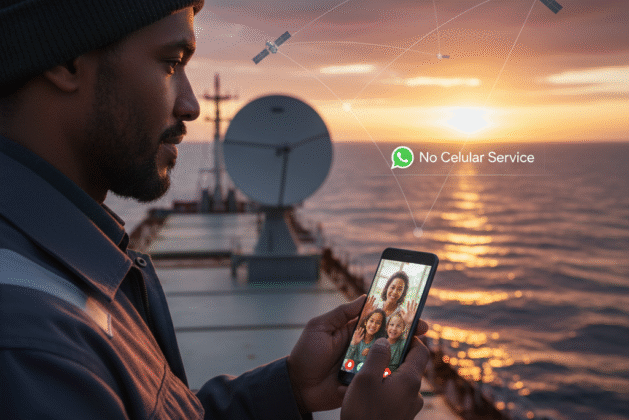
    Satellite WhatsApp on Pixel 10: A Lifeline for Seafarers

    A Leap Beyond SOS: Voice & Video Calls Over Satellite

    Google’s Pixel 10 series has emerged as the first smartphone capable of making WhatsApp voice and video calls via satellite connection, enabling true off-grid communication—no mobile network or Wi-Fi needed. Starting August 28, 2025, these devices (Pixel 10, Pixel 10 Pro, Pixel 10 Pro XL) began offering the feature in supported regions.

    This feature is especially fitting for seafarers—who often journey into vast expanses of the ocean with little to no cellular coverage. The ability to voice- or video-call via WhatsApp over satellite, with a clear satellite icon appearing in the status bar, marks a shift from emergency-only connectivity to everyday, reliable communication.

    Why It Matters for Seafarers

    • Constant communication: Stay connected with family, ports, or rescue services even in signal-dead zones.
    • Visual assurance via video: Rather than just audio, video calls provide real-time visual updates—critical in emergency or logistical situations.
    • Secure & encrypted: WhatsApp calls over satellite retain end-to-end encryption, ensuring communications remain private.
    • Multi-layered safety: Pairing the Pixel 10’s satellite WhatsApp calls with its existing Satellite SOS and live location sharing via Maps/Find My Hub, this device forms a comprehensive off-grid safety toolkit.

    Availability in India

    Current Status

    As of now, the Pixel 10’s satellite-based WhatsApp calling feature is not yet available in India. Google is rolling out the feature initially in the United States, with availability in India expected later—contingent on partnerships with local carriers and regulatory approvals.

    Is It Reachable Soon?

    Reports mention that BSNL, India’s state-run telecom operator, has hinted at launching satellite-based services, which suggests groundwork is being laid. However, there’s currently no confirmed timeline when Pixel 10’s satellite WhatsApp calls will go live in India.


    Additional Pixel 10 Features Beneficial to Seafarers

    • Satellite SOS: Can send emergency alerts via satellite when in distress, even without cell signal—critical for remote ocean voyages.
    • Live Location Sharing: Share precise real-time position through Google Maps or Find My Hub over satellite—ideal for navigation tracking or rescue coordination.
    • Take a Message Feature: Built into the Phone app, this feature records and transcribes messages from missed calls, storing both audio and text. Though not directly satellite-dependent, it can help when returning to signal—particularly useful if the vessel briefly regains coverage

    Shippys.org Will Track and Update

    At shippys.org, we will closely monitor Pixel 10 satellite WhatsApp availability in India and share updates as soon as they’re confirmed. This feature has the potential to dramatically improve seafarer welfare and maritime safety, and we’re committed to keeping the community informed.

    If you have firsthand experience with satellite services, maritime connectivity, or want to share insights, we invite you to contribute to shippys.org. Your knowledge can help seafarers across the globe stay connected and safe

  • Supreme Court to Decide Income Tax Exemption on Merchant Navy Officer’s Salary Credited in Indian Bank Account

    Supreme Court to Decide Income Tax Exemption on Merchant Navy Officer’s Salary Credited in Indian Bank Account

    India’s Supreme Court is poised to hear a landmark petition that could reshape how income earned abroad—but credited into Indian bank accounts—is taxed for Merchant Navy officers. At issue is whether such foreign-earned salary can be exempted from Indian income tax under the Indian Income Tax Act, 1961.


    Background: Vandana & Ors. vs. Keshav & Ors.

    The case stems from a motor-accident compensation claim arising from the death of a Merchant Navy officer who worked for British Marine PLC, London, earning USD 3,200 per month.

    • Motor Accident Claims Tribunal (MACT) awarded ₹36,04,000 as final compensation—including a 30% deduction interpreted as tax liability on the officer’s foreign salary.
    • Punjab & Haryana High Court upheld the 30% tax deduction but enhanced the award to ₹1.01 crore by adding 40% for future prospects.

    Unconvinced, the widow (Vandana) challenged the income-tax deduction, asserting that the salary earned abroad should be exempt from Indian taxation despite being credited to an Indian account.


    Legal Issue Before the Supreme Court

    On August 18, 2025, a bench of Justices Pankaj Mithal and Prasanna B. Varale granted leave to hear the matter, emphasizing its wide legal and practical implications.

    The central question:

    “Whether a person employed in Merchant Navy as an officer and drawing salary in accounts maintained in India is exempt from payment of income tax. If exempted, whether the Tribunal and the High Court erred in deducting 30% income tax while calculating compensation?”

    The Court notably observed:

    “In the event he is exempted from payment of tax, the Tribunal ought not to have applied any deduction on account of income tax.”


    Legal Framework & Precedents

    1. Section 5 – Scope of Total Income

    • Residents (Ordinary) are taxed on worldwide income.
    • Non-Residents are taxed only on income received or accruing in India.

    2. Section 6 – Residential Status

    • Merchant Navy officers often qualify as Non-Resident Indians (NRIs) if they spend fewer than 182 days in India during a financial year.

    3. Receipt vs. Remittance

    • Receipt refers to the first occasion an individual gains control over income.
    • Remittance is a subsequent transfer of already received funds.
    • Courts have held that salary earned and received abroad, then remitted to India, does not count as income received in India.

    4. Judicial Precedents

    • CIT v. S.G. Pgnatale (Gujarat, 1980)
    • CIT v. Dr. R.L. Bhargava (Delhi, 2004)
    • UTI v. P. Laxman Das (Supreme Court, 2000)
      These cases establish that foreign-earned income, credited to Indian accounts later, isn’t taxable for non-residents.

    Analysis: Why This Matters

    • Seafarers (especially Merchant Navy officers) often work abroad and remit their earnings to India. A favorable ruling would affirm that these salaries are not taxable in India, aligning with their non-resident status.
    • Compensation law across accident claims will be affected—removing tax deductions from awards may significantly benefit applicants.
    • Tax jurisprudence: This case could set a clear precedent regarding what constitutes “receipt” in India, a foundational concept in global income taxation.
    • Broader implications for expatriates and NRIs, extending beyond maritime professionals to others who earn abroad and remit earnings to India.

    Conclusion

    The Supreme Court’s forthcoming decision in Vandana & Ors. vs. Keshav & Ors., SLP (C) No. 5419/2019 (and associated matter SLP (C) No. 23162/2019), represents a critical juncture in tax and compensation law. If the Court rules that income earned and received abroad—but remitted to India—is exempt, it will uphold established legal norms and protect the rights of thousands of seafarers and expatriate workers.

    Shippys.org will continue to monitor updates closely—this ruling could have far-reaching consequences across the maritime, legal, and taxation domains.

  • DG Shipping Circular 31 of 2025: Impact, Legality, and Solutions
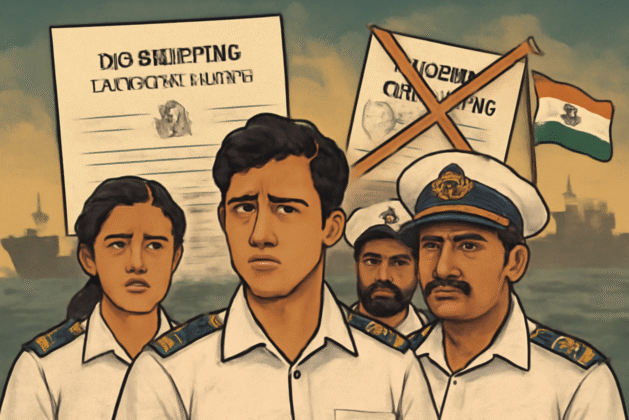
    DG Shipping Circular 31 of 2025: Impact, Legality, and Solutions

    Overview

    On 18 July 2025, the Directorate General of Shipping (DGS), India, issued Circular 31/2025—a policy that has ignited intense debate within the Indian seafaring community. The circular addresses the challenge of fraudulent and unapproved maritime certifications among Indian seafarers but imposes wide-reaching restrictions that may affect over 10,000 professionals1,2,3.

    Key Provisions of Circular 31/2025

    • Ban on Unapproved Certifications: Indian seafarers holding Certificates of Competency (CoC) or Proficiency (CoP) from unapproved or non-recognized foreign maritime authorities cannot be employed by RPSL (Recruitment and Placement Service Licence) agents.
    • Recognized Certificates: Only certificates issued by DGS-approved Indian maritime institutes, or by countries with mutual recognition agreements under STCW I/10 with India, are considered valid.
    • India has signed bilateral agreements for mutual recognition of CoCs/CoPs with several countries. This means that certificates issued by these maritime administrations are generally accepted for Indian seafarers serving on foreign-flagged ships. According to the latest information, these include:
      • Malaysia
      • UAE (United Arab Emirates)
      • South Korea (Republic of Korea)
      • Sweden
      • United Kingdom (UK)
      • Iran (Islamic Republic of Iran)
    • Certificates from Specific “White List” Countries (with verification): In addition to the countries with formal bilateral agreements, DGS Circular 31 of 2025 also states that Indian seafarers holding CoC/CoP and modular course certificates issued by the following countries may be accepted for recruitment if the certificates were obtained by attending training in these countries and their authenticity can be verified online from the respective maritime administration:
      • Singapore
      • Australia
      • New Zealand
      • Canada
      • Ireland
    • Fraudulent Certificates: The circular explicitly targets and invalidates CoCs/CoPs obtained through fraudulent means or from unapproved/unrecognized maritime administrations. Countries that have been specifically mentioned as sources of problematic certificates include Honduras, Panama, Gabon, Togo, and Belize. Seafarers holding certificates from these jurisdictions (often acquired through agents or non-approved institutes) will now be ineligible to sail under the DGS’s oversight and face severe penalties.
    • Penalties: Use of invalid certifications can lead to cancellation of a seafarer’s Continuous Discharge Certificate (CDC), deactivation of INDoS number, and permanent debarment from service.
    • Port Monitoring: Port State Control Officers are directed to rigorously check crew documents for compliance during vessel calls at Indian ports1,4.

    Intended Rationale

    1. Eliminate Fraudulent Practices: The circular responds to years of complaints about fake CoCs and stranded Indian seafarers on dubious “flags of convenience” vessels, often linked to fraudulent certifications1,5.
    2. Enhance Safety and Compliance: Indian authorities aim to align with international maritime standards by curbing the “certification shopping” industry, which undermines competence and vessel safety.
    3. Support Indian Training: The move is designed to reinforce confidence in India’s own maritime training infrastructure1,6.

    Legal Contradictions

    High Court of Madras – WP 28350 of 2017

    The Madras High Court, in WP 28350 of 2017 (video order dated 01.09.2022), made the following critical observation in Para 9:

    “The Centre government is not empowered to prevent an Indian citizen from seeking direct employment with a foreign ship owner. Any blanket prohibition infringes upon the constitutional rights of citizens.”7,8

    Following a legal challenge to DG Shipping’s earlier prohibition, the court ruled it unconstitutional to restrict the right of Indian seafarers to be employed directly by foreign ship owners—even if not routed via an RPSL. The government’s attempt to regulate such direct employment was found to exceed statutory authority7,9, and the judgment was upheld by a division bench10.

    Circular 31/2025: Legal Standing

    The new circular appears to conflict with the Madras High Court’s precedent, especially in how it criminalizes certifications that may be legitimately obtained from third countries. There are widespread concerns regarding:

    • Jurisdictional Overreach: The circular tries to impose India’s standards on Indian citizens working on foreign-flagged vessels, potentially exceeding the regulatory powers recognized by law and by the court1,7.
    • Potential Violation of Rights: Blanket restrictions on all forms of foreign-issued certifications (regardless of their legitimacy) risk infringing upon constitutionally guaranteed rights, as stated by the Madras High Court.

    Impact on Indian Seafarers

    • Large-Scale Job Losses: Estimates suggest between 10,000 and 20,000 Indian seafarers could be rendered jobless, particularly those working on foreign-flagged ships with certifications from countries not recognized under India’s I/10 mutual agreements2, 11, 3.
    • Disrupted Careers: Many seafarers obtained foreign certifications through legitimate pathways well before the new circular—a move now jeopardizing their livelihoods without a proper transition plan.
    • Confusion and Uncertainty: The exclusion of certain “White List” countries (like Singapore and Canada) from India’s I/10 regime has caused confusion and anxiety among those with such certifications1.

    Social Media and Industry Reaction

    • Outrage and Petitions: Social media is awash with protests—posts and petitions decrying the policy as both unfair and economically devastating for families reliant on seafarer incomes11,2,3.
    • Webinars and Advocacy: Unions and advocacy groups are organizing webinars, workshops, and petition drives calling for amendment or reversal of the circular12.
    • Division within Industry: Some senior mariners support the move as necessary for compliance and safety, while younger and mid-career seafarers view it as an attack on their basic rights and job security6,13.

    Implementation Challenges

    • Global Enforcement Issues: Shipping is a transnational industry. Attempting to police Indian citizens serving on foreign-flag vessels runs into jurisdictional and enforcement obstacles.
    • Workarounds and Loopholes: Overly strict rules may push seafarers into unregulated pathways, including informal arrangements that escape regulatory oversight—thus undermining the aim of improved compliance1.
    • Legal Backlash: Failure to reconcile the circular with court rulings exposes stakeholders to fresh rounds of litigation, and may weaken India’s international maritime reputation.

    Recommendations and Solutions

    1. Broaden I/10 Mutual Recognition

    • Expedite bilateral agreements with all reputable “White List” maritime countries to ensure Indian seafarers are not arbitrarily disqualified for holding recognized foreign certificates.

    2. Nuanced Regulation Instead of Blanket Bans

    • Target fraudulent and unaccredited certifications directly, rather than penalizing all holders of non-Indian certificates.
    • Enable exceptions or recognition pathways for seafarers with demonstrated legitimate training and experience abroad.

    3. Legislative Clarity and Compliance with Judiciary

    • Any new regulations should be in strict alignment with established court rulings, especially upholding constitutional rights to work and seek employment abroad.

    4. Support and Transition Assistance

    • Provide guidance and upskilling opportunities for affected seafarers, including support to convert or regularize legitimate foreign certifications under Indian standards.

    5. Stronger Action Against Agents, Not Seafarers

    • Ramp up action against fake recruitment agents and unapproved training institutes, instead of targeting the end-beneficiaries—Indian seafarers.

    Conclusion:
    DG Shipping Circular 31/2025 represents a major policy crossroad for Indian seafarers. While the intent—to fight certificate fraud and boost standards—is worthy, the implementation urgently needs a rights-based, internationally aligned, and judicially sound approach if it is to protect both Indian jobs and the nation’s maritime reputation1,11,2,7.


    Check sources for further reference –

    1. https://www.maritimegateway.com/circular-31-of-2025-navigating-the-storm-in-seafarer-certification/
    2. https://www.change.org/p/overturn-dg-shipping-circular-31-of-2025-to-save-seafarer-jobs
    3. https://x.com/seaandcoast1/status/1946978316394864732
    4. https://www.dgshipping.gov.in/news.aspx
    5. https://www.instagram.com/reel/DMP9zuSPWwa/
    6. https://www.linkedin.com/posts/kunaltandon11_maritimesafety-dgshipping-seafarerstandards-activity-7352657762247471104-ACFo
    7. https://inmathi.com/2022/09/14/madras-hc-verdict-can-boost-jobs-in-foreign-shipping/65232/
    8. https://indiankanoon.org/doc/59622245/
    9. https://indiankanoon.org/doc/119207174/
    10. https://www.iswan.org.uk/wp-content/uploads/ISWAN-GMU-Summary-Report.pdf
    11. https://change.org/p/reevaluate-and-amend-dg-shipping-circular-31-2025
    12. https://x.com/AllSeafarers/status/1946978915953877069
    13. https://x.com/PrasharSdp/status/1946177522166628733
    14. https://dgshipping.gov.in/WriteReadData/News/202507181056461001460NT-DGSCircularNo31of25.pdf
    15. https://www.dgshipping.gov.in/Content/viewLatestNews.aspx?id=2723
    16. https://www.youtube.com/watch?v=5oiejU1bDHY
    17. https://dgshipping.gov.in/WriteReadData/News/202405090551443756684Socialmediapolicy-09-05-24.pdf
    18. https://www.dgshipping.gov.in
    19. https://www.instagram.com/p/DFvb-p_TKEl/
    20. https://www.instagram.com/reel/DFfGssCPQts/
    21. https://www.mhc.tn.gov.in/judis/clists/clists-madras/causelists/pdf/cause_11062024.pdf
    22. https://www.mhc.tn.gov.in/judis/clists/clists-madras/causelists/pdf/cause_21062024.pdf
    23. https://main.sci.gov.in/supremecourt/2021/32257/32257_2021_4_1501_42867_Judgement_17-Mar-2023.pdf
    24. https://images.assettype.com/barandbench/import/2018/03/TRAI-JUDGEMENT-W_P_-Nos_44126-and-44127-of-2016-1-1-watermark.pdf
    25. https://www.livelaw.in/round-ups/monthly/madras-high-court-monthly-digest-october-2022-213342
    26. https://www.livelaw.in/round-ups/monthly/madras-high-court-monthly-digest-september-2022-211128
    27. https://www.livelaw.in/round-ups/monthly/madras-high-court-monthly-digest-november-2022-215799
    28. https://www.livelaw.in/top-stories/madras-high-court-important-judgments-2022-217984
    29. https://www.livelaw.in/round-ups/madras-high-court-weekly-roundup-september-12-to-18-2022-209608
    30. https://images.assettype.com/barandbench/2024-08/76719aeb-25a0-400f-9c94-879078419dca/M_Kathirvel_v__Inspector_General_of_Registration_and_Others.pdf
    31. https://indiankanoon.org/doc/52435313/
    32. https://main.sci.gov.in/jonew/cl/advance/2022-05-18/M_J.pdf
  • Women in Shipping – Progress, Challenges, and the Reality Check

    Women in Shipping – Progress, Challenges, and the Reality Check

    The shipping industry, one of the oldest and most male-dominated sectors, is undergoing a slow but visible transformation. As part of the push toward gender equality, aligned with the United Nations Sustainable Development Goal 5, many maritime organizations are now striving to recruit and retain women in seafaring roles. But while the intent is noble, the path forward demands a closer look at both opportunities and ground realities.


    Women in Maritime: The Numbers

    • According to the International Maritime Organization (IMO), women represent just 1.2% of the global seafarer workforce.
    • Out of this, 94% of women seafarers are employed in the cruise industry, where conditions are generally more structured and accommodating.
    • In India, as per DG Shipping, the number of women with valid Continuous Discharge Certificates (CDCs) rose from around 1,200 in 2014 to over 10,000 by 2023 — a positive trend, but still a small fraction compared to the total 250,000+ active seafarers.

    Despite this progress, the numbers tell us that women in core cargo shipping roles are still an exception, not the norm.


    The Life at Sea: Equal Opportunity or Unequal Challenge?

    Working at sea is vastly different from land-based jobs. Seafarers face long periods of isolation, erratic work hours, physical strain, and limited access to communication, often with internet limited to a few megabytes per day or restricted by time. These conditions can take a serious toll on mental health.

    Women face additional layers of complexity:

    • Safety concerns, especially on male-dominated vessels.
    • Lack of proper accommodation (many ships still don’t have designated women’s cabins or bathrooms).
    • Medical preparedness, as some ships don’t stock gender-specific health supplies unless prompted.
    • Social isolation, exacerbated by the lack of access to emotional support systems.

    Real-Life Cases

    On one of my previous vessels, a female 3rd Officer was scheduled to join. The company proactively sent a list of female-specific medical supplies to be stocked before her arrival. Instead of the usual officer cabin, she was allocated the pilot cabin, positioned next to the Master’s quarters—reflecting how onboard arrangements still require improvisation rather than inclusive planning.

    Another case I recall from my cadetship involved a female cadet who fainted during preparations for cargo hold cleaning—a physically demanding task. She was soon disembarked, allegedly for not being physically fit for the role. Though such incidents may not represent the majority, they highlight the gaps between policy and preparedness.


    Celebrating Success While Staying Grounded

    India is home to remarkable women like Captain Radhika Menon, the first female captain in the Indian Merchant Navy and the recipient of the IMO Award for Exceptional Bravery at Sea. Her rescue of seven fishermen from a sinking vessel in turbulent weather is a testimony to women’s capability in maritime leadership.

    These stories are important—but they should not blind us to the fact that true inclusion requires systemic change.


    A Balanced Approach Forward

    The maritime industry cannot afford to ignore half of the population. But inclusion must come with infrastructure, support systems, and mindset changes onboard.

    • Mandatory policies for safe accommodation, harassment prevention, and emergency support.
    • Mental health resources and regular communication access.
    • Training ship officers and crew in gender sensitivity and inclusive leadership.
    • Transparent data collection and reporting on gender dynamics onboard vessels.

    Conclusion

    Recruiting women into shipping is a step forward—but real progress will depend on how prepared the industry is to support them at sea. Equality isn’t just about access—it’s about enabling success without compromise.

    Let’s move forward with pride in our achievements, but also with honesty about our shortcomings.


    Below are the websites and direct links for the references cited in the blog

    1. UNCTAD: Review of Maritime Transport 2023

    2. International Maritime Organization (IMO): Women in Maritime Reports

    3. International Transport Workers’ Federation (ITF): Women Seafarers’ Health and Welfare Study

    4. World Maritime University (WMU): Gender Studies in Maritime

    5. WISTA International: Diversity in Maritime 2023


    Have a story to share or an experience to voice? Write to us at shippys.org — a platform by and for seafarers. Anonymous entries welccome.