Category: 🚀 Personal Development

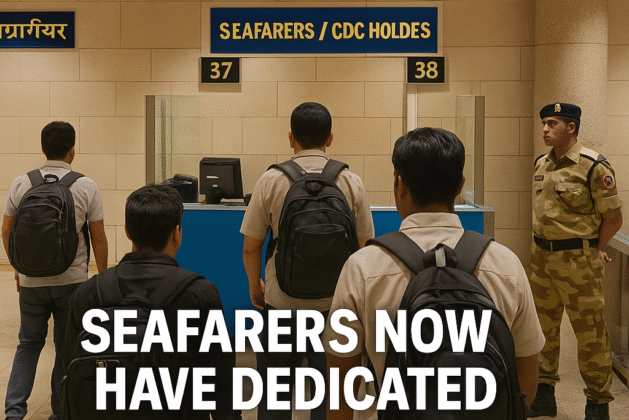
  • Seafarers Now Have Dedicated Immigration Counters at Indian Airports

    Seafarers Now Have Dedicated Immigration Counters at Indian Airports


    A Welcome Change for India’s Maritime Workforce

    Good news for Indian seafarers! Immigration authorities at several major airports across India have now introduced dedicated immigration counters exclusively for seafarers and CDC holders. This move aims to make the travel experience smoother and faster for maritime professionals who often face tight joining or sign-off schedules.

    Why This Change Matters

    Seafarers are the backbone of global trade, spending months away from home to keep the world’s supply chains running. Yet, many have long faced delays at airports — standing in long queues at immigration after exhausting journeys or before critical ship-joining deadlines.

    Recognizing this, Indian airport and immigration authorities have rolled out exclusive “Seafarers / CDC Holders” counters at select airports, ensuring quicker processing and specialized handling of documentation related to crew movement.

    Where You’ll Find These Counters

    These dedicated counters have already been spotted at:

    • Mumbai International Airport (CSMIA) – Terminal 2 now features a separate section for “Seafarers / CDC Holders.”
    • Chennai International Airport – Seafarer queues available at the departure immigration area.
    • Cochin International Airport – Similar dedicated arrangements for crew members joining vessels.
    • Delhi IGI Airport (Terminal 3) – Special lane or counter for CDC holders during high-traffic hours.
    • Kolkata and Goa Airports – Reported to have designated lines for seafarers in certain shifts.

    At most airports, these counters are located at the last few booths in the immigration area, clearly marked with signboards reading “Seafarers / CDC Holders.”

    What You’ll Need

    To use the dedicated counter, seafarers should keep the following documents ready:

    • Passport
    • CDC (Continuous Discharge Certificate)
    • Company Letter of Employment / Joining Instructions
    • Valid Visa and Travel Ticket
    • Boarding Pass

    The Impact

    This change has been welcomed widely within the maritime community. Not only does it save valuable time, but it also acknowledges the vital contribution of Indian seafarers to the nation’s economy and global trade.

    By simplifying the immigration process, authorities are taking a step toward better welfare and recognition of Indian seafarers, who number over 250,000 globally and continue to make India one of the world’s top seafarer-supplying nations.

    Final Thoughts

    A small step, but a meaningful one — separate immigration counters for seafarers reflect growing respect and awareness for the maritime profession in India. It’s a positive signal that authorities are listening to the community’s needs and working to ease their travel experience.

    So next time you’re at the airport, look for the “Seafarers / CDC Holders” sign — and sail through immigration with ease!


  • IMU Online MBA for CoC Holders: The Ultimate Career Upgrade for Seafarers
    IMU Online MBA for CoC Holders: The Ultimate Career Upgrade for Seafarers


    For years, Indian seafarers have looked for ways to transition from life at sea to leadership roles ashore — in shipping, logistics, and port management.
    Now, with the Indian Maritime University (IMU) offering an Online MBA in Maritime Management for CoC holders, that goal is more achievable than ever.

    If you’re a Chief Officer, 2nd Engineer, or anyone holding a valid Certificate of Competency (CoC), this program is designed just for you.


    ⚓ What Is the IMU Online MBA in Maritime Management?

    The IMU Online MBA (Maritime Management) is a two-year postgraduate degree tailored for working seafarers who already hold a Certificate of Competency (CoC) issued by the Directorate General of Shipping, Government of India.

    Unlike traditional full-time programs, this course allows you to:

    • Continue your sea service or offshore job, and
    • Earn an MBA degree recognized by a Central University (IMU)

    All without leaving your sailing schedule.


    🎯 Key Features of the Program

    • 💻 Completely Online – Attend classes and exams from anywhere in the world.
    • ⏰ Flexible Learning – Designed to fit seafarers’ erratic sailing schedules.
    • ⚙️ Maritime-Focused Curriculum – Combines management studies with shipping, logistics, and port operations.
    • 🎓 UGC-Recognized Degree – Awarded by Indian Maritime University, a Government of India institution.
    • 🤝 Industry-Oriented – Focus on practical leadership, maritime law, finance, and logistics management.

    🧭 Who Can Apply?

    This course is exclusively for licensed seafarers who hold:

    • A valid Certificate of Competency (CoC) issued by DG Shipping, India.
    • Minimum academic qualification as prescribed in the IMU notification (usually 10+2 and CoC).

    Note: A CDC alone is not sufficient — you must possess a valid CoC (Deck or Engine).


    🎓 Course Duration & Structure

    • Duration: 2 years (4 semesters)
    • Mode: Online learning via IMU’s e-learning platform
    • Assessment: Online assignments, projects, and exams

    Subjects typically include:

    • Maritime Business & Law
    • Shipping Finance & Economics
    • Logistics & Supply Chain Management
    • Strategic Management
    • Port Operations & Management
    • International Trade & Transport Systems

    💰 Fees (Approximate)

    ParticularAmount (INR)
    Tuition Fees (Per Year)₹1.75 – ₹2.0 lakh
    Total Program Cost (2 Years)₹3.5 – ₹4.0 lakh

    (May vary slightly depending on the academic year and IMU’s official circular.)


    🧾 Admission Process

    1. Visit the official IMU website – imu.edu.in
    2. Check the latest notification under “Admissions → Online Programmes”
    3. Fill out the online application form for the MBA (Maritime Management) – for CoC Holders
    4. Upload CoC and educational documents
    5. Pay the application fee and await confirmation

    Good news:
    👉 No IMU-CET (Entrance Test) is required for this program.
    Admissions are based on eligibility and seat availability.


    🌍 Career Scope After MBA

    Once you complete the IMU MBA, new opportunities open up ashore — where your sea experience meets management expertise.

    Typical roles include:

    • Fleet Personnel / Technical Superintendent
    • Port Operations or Terminal Manager
    • Ship Management Executive
    • Chartering / Commercial Operations Manager
    • Marine Surveyor / Consultant
    • Maritime Training Faculty
    • Supply Chain & Logistics Executive

    Your CoC plus MBA combination gives you an edge for shore-based managerial roles across shipping companies, logistics firms, port authorities, and marine consultancies.


    🧠 Why CoC Holders Should Consider This MBA

    1. Advance Career Beyond Sea Life – Move into leadership positions ashore.
    2. Gain Management Skills – Learn finance, HR, strategy, and business analytics.
    3. Stay Relevant – As automation and AI reshape maritime operations.
    4. Government-Recognized Degree – Adds academic weight to your professional CoC.
    5. Work While You Study – Ideal for officers who can’t take long study breaks.

    ⚠️ Important Notes

    • The program is for CoC holders only, not CDC holders.
    • Always verify eligibility, schedule, and fees via official IMU notifications — updates vary yearly.
    • Having a valid CoC at the time of admission is mandatory.

    📅 Admission Cycle

    Typically, IMU opens applications for the Online MBA in Maritime Management once a year (around March–April).
    Keep checking the “Latest Updates” section on IMU’s website:
    👉 https://www.imu.edu.in


    🧩 Final Thoughts

    For Indian seafarers ready to steer their careers toward the shore, the IMU Online MBA for CoC holders is the perfect bridge between maritime experience and managerial excellence.

    It’s flexible, industry-focused, and backed by the credibility of India’s leading maritime university.

    If you’ve earned your CoC, this is your next big step — from captaining ships to managing shipping companies.


  • Supreme Court to Decide Income Tax Exemption on Merchant Navy Officer’s Salary Credited in Indian Bank Account

    Supreme Court to Decide Income Tax Exemption on Merchant Navy Officer’s Salary Credited in Indian Bank Account

    India’s Supreme Court is poised to hear a landmark petition that could reshape how income earned abroad—but credited into Indian bank accounts—is taxed for Merchant Navy officers. At issue is whether such foreign-earned salary can be exempted from Indian income tax under the Indian Income Tax Act, 1961.


    Background: Vandana & Ors. vs. Keshav & Ors.

    The case stems from a motor-accident compensation claim arising from the death of a Merchant Navy officer who worked for British Marine PLC, London, earning USD 3,200 per month.

    • Motor Accident Claims Tribunal (MACT) awarded ₹36,04,000 as final compensation—including a 30% deduction interpreted as tax liability on the officer’s foreign salary.
    • Punjab & Haryana High Court upheld the 30% tax deduction but enhanced the award to ₹1.01 crore by adding 40% for future prospects.

    Unconvinced, the widow (Vandana) challenged the income-tax deduction, asserting that the salary earned abroad should be exempt from Indian taxation despite being credited to an Indian account.


    Legal Issue Before the Supreme Court

    On August 18, 2025, a bench of Justices Pankaj Mithal and Prasanna B. Varale granted leave to hear the matter, emphasizing its wide legal and practical implications.

    The central question:

    “Whether a person employed in Merchant Navy as an officer and drawing salary in accounts maintained in India is exempt from payment of income tax. If exempted, whether the Tribunal and the High Court erred in deducting 30% income tax while calculating compensation?”

    The Court notably observed:

    “In the event he is exempted from payment of tax, the Tribunal ought not to have applied any deduction on account of income tax.”


    Legal Framework & Precedents

    1. Section 5 – Scope of Total Income

    • Residents (Ordinary) are taxed on worldwide income.
    • Non-Residents are taxed only on income received or accruing in India.

    2. Section 6 – Residential Status

    • Merchant Navy officers often qualify as Non-Resident Indians (NRIs) if they spend fewer than 182 days in India during a financial year.

    3. Receipt vs. Remittance

    • Receipt refers to the first occasion an individual gains control over income.
    • Remittance is a subsequent transfer of already received funds.
    • Courts have held that salary earned and received abroad, then remitted to India, does not count as income received in India.

    4. Judicial Precedents

    • CIT v. S.G. Pgnatale (Gujarat, 1980)
    • CIT v. Dr. R.L. Bhargava (Delhi, 2004)
    • UTI v. P. Laxman Das (Supreme Court, 2000)
      These cases establish that foreign-earned income, credited to Indian accounts later, isn’t taxable for non-residents.

    Analysis: Why This Matters

    • Seafarers (especially Merchant Navy officers) often work abroad and remit their earnings to India. A favorable ruling would affirm that these salaries are not taxable in India, aligning with their non-resident status.
    • Compensation law across accident claims will be affected—removing tax deductions from awards may significantly benefit applicants.
    • Tax jurisprudence: This case could set a clear precedent regarding what constitutes “receipt” in India, a foundational concept in global income taxation.
    • Broader implications for expatriates and NRIs, extending beyond maritime professionals to others who earn abroad and remit earnings to India.

    Conclusion

    The Supreme Court’s forthcoming decision in Vandana & Ors. vs. Keshav & Ors., SLP (C) No. 5419/2019 (and associated matter SLP (C) No. 23162/2019), represents a critical juncture in tax and compensation law. If the Court rules that income earned and received abroad—but remitted to India—is exempt, it will uphold established legal norms and protect the rights of thousands of seafarers and expatriate workers.

    Shippys.org will continue to monitor updates closely—this ruling could have far-reaching consequences across the maritime, legal, and taxation domains.

  • DG Shipping Circular 31 of 2025: Impact, Legality, and Solutions
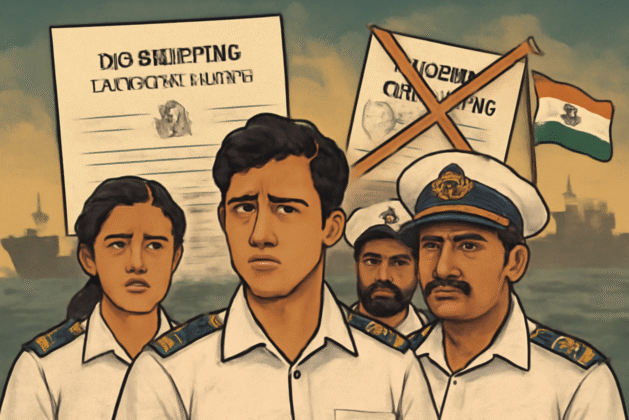
    DG Shipping Circular 31 of 2025: Impact, Legality, and Solutions

    Overview

    On 18 July 2025, the Directorate General of Shipping (DGS), India, issued Circular 31/2025—a policy that has ignited intense debate within the Indian seafaring community. The circular addresses the challenge of fraudulent and unapproved maritime certifications among Indian seafarers but imposes wide-reaching restrictions that may affect over 10,000 professionals1,2,3.

    Key Provisions of Circular 31/2025

    • Ban on Unapproved Certifications: Indian seafarers holding Certificates of Competency (CoC) or Proficiency (CoP) from unapproved or non-recognized foreign maritime authorities cannot be employed by RPSL (Recruitment and Placement Service Licence) agents.
    • Recognized Certificates: Only certificates issued by DGS-approved Indian maritime institutes, or by countries with mutual recognition agreements under STCW I/10 with India, are considered valid.
    • India has signed bilateral agreements for mutual recognition of CoCs/CoPs with several countries. This means that certificates issued by these maritime administrations are generally accepted for Indian seafarers serving on foreign-flagged ships. According to the latest information, these include:
      • Malaysia
      • UAE (United Arab Emirates)
      • South Korea (Republic of Korea)
      • Sweden
      • United Kingdom (UK)
      • Iran (Islamic Republic of Iran)
    • Certificates from Specific “White List” Countries (with verification): In addition to the countries with formal bilateral agreements, DGS Circular 31 of 2025 also states that Indian seafarers holding CoC/CoP and modular course certificates issued by the following countries may be accepted for recruitment if the certificates were obtained by attending training in these countries and their authenticity can be verified online from the respective maritime administration:
      • Singapore
      • Australia
      • New Zealand
      • Canada
      • Ireland
    • Fraudulent Certificates: The circular explicitly targets and invalidates CoCs/CoPs obtained through fraudulent means or from unapproved/unrecognized maritime administrations. Countries that have been specifically mentioned as sources of problematic certificates include Honduras, Panama, Gabon, Togo, and Belize. Seafarers holding certificates from these jurisdictions (often acquired through agents or non-approved institutes) will now be ineligible to sail under the DGS’s oversight and face severe penalties.
    • Penalties: Use of invalid certifications can lead to cancellation of a seafarer’s Continuous Discharge Certificate (CDC), deactivation of INDoS number, and permanent debarment from service.
    • Port Monitoring: Port State Control Officers are directed to rigorously check crew documents for compliance during vessel calls at Indian ports1,4.

    Intended Rationale

    1. Eliminate Fraudulent Practices: The circular responds to years of complaints about fake CoCs and stranded Indian seafarers on dubious “flags of convenience” vessels, often linked to fraudulent certifications1,5.
    2. Enhance Safety and Compliance: Indian authorities aim to align with international maritime standards by curbing the “certification shopping” industry, which undermines competence and vessel safety.
    3. Support Indian Training: The move is designed to reinforce confidence in India’s own maritime training infrastructure1,6.

    Legal Contradictions

    High Court of Madras – WP 28350 of 2017

    The Madras High Court, in WP 28350 of 2017 (video order dated 01.09.2022), made the following critical observation in Para 9:

    “The Centre government is not empowered to prevent an Indian citizen from seeking direct employment with a foreign ship owner. Any blanket prohibition infringes upon the constitutional rights of citizens.”7,8

    Following a legal challenge to DG Shipping’s earlier prohibition, the court ruled it unconstitutional to restrict the right of Indian seafarers to be employed directly by foreign ship owners—even if not routed via an RPSL. The government’s attempt to regulate such direct employment was found to exceed statutory authority7,9, and the judgment was upheld by a division bench10.

    Circular 31/2025: Legal Standing

    The new circular appears to conflict with the Madras High Court’s precedent, especially in how it criminalizes certifications that may be legitimately obtained from third countries. There are widespread concerns regarding:

    • Jurisdictional Overreach: The circular tries to impose India’s standards on Indian citizens working on foreign-flagged vessels, potentially exceeding the regulatory powers recognized by law and by the court1,7.
    • Potential Violation of Rights: Blanket restrictions on all forms of foreign-issued certifications (regardless of their legitimacy) risk infringing upon constitutionally guaranteed rights, as stated by the Madras High Court.

    Impact on Indian Seafarers

    • Large-Scale Job Losses: Estimates suggest between 10,000 and 20,000 Indian seafarers could be rendered jobless, particularly those working on foreign-flagged ships with certifications from countries not recognized under India’s I/10 mutual agreements2, 11, 3.
    • Disrupted Careers: Many seafarers obtained foreign certifications through legitimate pathways well before the new circular—a move now jeopardizing their livelihoods without a proper transition plan.
    • Confusion and Uncertainty: The exclusion of certain “White List” countries (like Singapore and Canada) from India’s I/10 regime has caused confusion and anxiety among those with such certifications1.

    Social Media and Industry Reaction

    • Outrage and Petitions: Social media is awash with protests—posts and petitions decrying the policy as both unfair and economically devastating for families reliant on seafarer incomes11,2,3.
    • Webinars and Advocacy: Unions and advocacy groups are organizing webinars, workshops, and petition drives calling for amendment or reversal of the circular12.
    • Division within Industry: Some senior mariners support the move as necessary for compliance and safety, while younger and mid-career seafarers view it as an attack on their basic rights and job security6,13.

    Implementation Challenges

    • Global Enforcement Issues: Shipping is a transnational industry. Attempting to police Indian citizens serving on foreign-flag vessels runs into jurisdictional and enforcement obstacles.
    • Workarounds and Loopholes: Overly strict rules may push seafarers into unregulated pathways, including informal arrangements that escape regulatory oversight—thus undermining the aim of improved compliance1.
    • Legal Backlash: Failure to reconcile the circular with court rulings exposes stakeholders to fresh rounds of litigation, and may weaken India’s international maritime reputation.

    Recommendations and Solutions

    1. Broaden I/10 Mutual Recognition

    • Expedite bilateral agreements with all reputable “White List” maritime countries to ensure Indian seafarers are not arbitrarily disqualified for holding recognized foreign certificates.

    2. Nuanced Regulation Instead of Blanket Bans

    • Target fraudulent and unaccredited certifications directly, rather than penalizing all holders of non-Indian certificates.
    • Enable exceptions or recognition pathways for seafarers with demonstrated legitimate training and experience abroad.

    3. Legislative Clarity and Compliance with Judiciary

    • Any new regulations should be in strict alignment with established court rulings, especially upholding constitutional rights to work and seek employment abroad.

    4. Support and Transition Assistance

    • Provide guidance and upskilling opportunities for affected seafarers, including support to convert or regularize legitimate foreign certifications under Indian standards.

    5. Stronger Action Against Agents, Not Seafarers

    • Ramp up action against fake recruitment agents and unapproved training institutes, instead of targeting the end-beneficiaries—Indian seafarers.

    Conclusion:
    DG Shipping Circular 31/2025 represents a major policy crossroad for Indian seafarers. While the intent—to fight certificate fraud and boost standards—is worthy, the implementation urgently needs a rights-based, internationally aligned, and judicially sound approach if it is to protect both Indian jobs and the nation’s maritime reputation1,11,2,7.


    Check sources for further reference –

    1. https://www.maritimegateway.com/circular-31-of-2025-navigating-the-storm-in-seafarer-certification/
    2. https://www.change.org/p/overturn-dg-shipping-circular-31-of-2025-to-save-seafarer-jobs
    3. https://x.com/seaandcoast1/status/1946978316394864732
    4. https://www.dgshipping.gov.in/news.aspx
    5. https://www.instagram.com/reel/DMP9zuSPWwa/
    6. https://www.linkedin.com/posts/kunaltandon11_maritimesafety-dgshipping-seafarerstandards-activity-7352657762247471104-ACFo
    7. https://inmathi.com/2022/09/14/madras-hc-verdict-can-boost-jobs-in-foreign-shipping/65232/
    8. https://indiankanoon.org/doc/59622245/
    9. https://indiankanoon.org/doc/119207174/
    10. https://www.iswan.org.uk/wp-content/uploads/ISWAN-GMU-Summary-Report.pdf
    11. https://change.org/p/reevaluate-and-amend-dg-shipping-circular-31-2025
    12. https://x.com/AllSeafarers/status/1946978915953877069
    13. https://x.com/PrasharSdp/status/1946177522166628733
    14. https://dgshipping.gov.in/WriteReadData/News/202507181056461001460NT-DGSCircularNo31of25.pdf
    15. https://www.dgshipping.gov.in/Content/viewLatestNews.aspx?id=2723
    16. https://www.youtube.com/watch?v=5oiejU1bDHY
    17. https://dgshipping.gov.in/WriteReadData/News/202405090551443756684Socialmediapolicy-09-05-24.pdf
    18. https://www.dgshipping.gov.in
    19. https://www.instagram.com/p/DFvb-p_TKEl/
    20. https://www.instagram.com/reel/DFfGssCPQts/
    21. https://www.mhc.tn.gov.in/judis/clists/clists-madras/causelists/pdf/cause_11062024.pdf
    22. https://www.mhc.tn.gov.in/judis/clists/clists-madras/causelists/pdf/cause_21062024.pdf
    23. https://main.sci.gov.in/supremecourt/2021/32257/32257_2021_4_1501_42867_Judgement_17-Mar-2023.pdf
    24. https://images.assettype.com/barandbench/import/2018/03/TRAI-JUDGEMENT-W_P_-Nos_44126-and-44127-of-2016-1-1-watermark.pdf
    25. https://www.livelaw.in/round-ups/monthly/madras-high-court-monthly-digest-october-2022-213342
    26. https://www.livelaw.in/round-ups/monthly/madras-high-court-monthly-digest-september-2022-211128
    27. https://www.livelaw.in/round-ups/monthly/madras-high-court-monthly-digest-november-2022-215799
    28. https://www.livelaw.in/top-stories/madras-high-court-important-judgments-2022-217984
    29. https://www.livelaw.in/round-ups/madras-high-court-weekly-roundup-september-12-to-18-2022-209608
    30. https://images.assettype.com/barandbench/2024-08/76719aeb-25a0-400f-9c94-879078419dca/M_Kathirvel_v__Inspector_General_of_Registration_and_Others.pdf
    31. https://indiankanoon.org/doc/52435313/
    32. https://main.sci.gov.in/jonew/cl/advance/2022-05-18/M_J.pdf
  • Women in Shipping – Progress, Challenges, and the Reality Check

    Women in Shipping – Progress, Challenges, and the Reality Check

    The shipping industry, one of the oldest and most male-dominated sectors, is undergoing a slow but visible transformation. As part of the push toward gender equality, aligned with the United Nations Sustainable Development Goal 5, many maritime organizations are now striving to recruit and retain women in seafaring roles. But while the intent is noble, the path forward demands a closer look at both opportunities and ground realities.


    Women in Maritime: The Numbers

    • According to the International Maritime Organization (IMO), women represent just 1.2% of the global seafarer workforce.
    • Out of this, 94% of women seafarers are employed in the cruise industry, where conditions are generally more structured and accommodating.
    • In India, as per DG Shipping, the number of women with valid Continuous Discharge Certificates (CDCs) rose from around 1,200 in 2014 to over 10,000 by 2023 — a positive trend, but still a small fraction compared to the total 250,000+ active seafarers.

    Despite this progress, the numbers tell us that women in core cargo shipping roles are still an exception, not the norm.


    The Life at Sea: Equal Opportunity or Unequal Challenge?

    Working at sea is vastly different from land-based jobs. Seafarers face long periods of isolation, erratic work hours, physical strain, and limited access to communication, often with internet limited to a few megabytes per day or restricted by time. These conditions can take a serious toll on mental health.

    Women face additional layers of complexity:

    • Safety concerns, especially on male-dominated vessels.
    • Lack of proper accommodation (many ships still don’t have designated women’s cabins or bathrooms).
    • Medical preparedness, as some ships don’t stock gender-specific health supplies unless prompted.
    • Social isolation, exacerbated by the lack of access to emotional support systems.

    Real-Life Cases

    On one of my previous vessels, a female 3rd Officer was scheduled to join. The company proactively sent a list of female-specific medical supplies to be stocked before her arrival. Instead of the usual officer cabin, she was allocated the pilot cabin, positioned next to the Master’s quarters—reflecting how onboard arrangements still require improvisation rather than inclusive planning.

    Another case I recall from my cadetship involved a female cadet who fainted during preparations for cargo hold cleaning—a physically demanding task. She was soon disembarked, allegedly for not being physically fit for the role. Though such incidents may not represent the majority, they highlight the gaps between policy and preparedness.


    Celebrating Success While Staying Grounded

    India is home to remarkable women like Captain Radhika Menon, the first female captain in the Indian Merchant Navy and the recipient of the IMO Award for Exceptional Bravery at Sea. Her rescue of seven fishermen from a sinking vessel in turbulent weather is a testimony to women’s capability in maritime leadership.

    These stories are important—but they should not blind us to the fact that true inclusion requires systemic change.


    A Balanced Approach Forward

    The maritime industry cannot afford to ignore half of the population. But inclusion must come with infrastructure, support systems, and mindset changes onboard.

    • Mandatory policies for safe accommodation, harassment prevention, and emergency support.
    • Mental health resources and regular communication access.
    • Training ship officers and crew in gender sensitivity and inclusive leadership.
    • Transparent data collection and reporting on gender dynamics onboard vessels.

    Conclusion

    Recruiting women into shipping is a step forward—but real progress will depend on how prepared the industry is to support them at sea. Equality isn’t just about access—it’s about enabling success without compromise.

    Let’s move forward with pride in our achievements, but also with honesty about our shortcomings.


    Below are the websites and direct links for the references cited in the blog

    1. UNCTAD: Review of Maritime Transport 2023

    2. International Maritime Organization (IMO): Women in Maritime Reports

    3. International Transport Workers’ Federation (ITF): Women Seafarers’ Health and Welfare Study

    4. World Maritime University (WMU): Gender Studies in Maritime

    5. WISTA International: Diversity in Maritime 2023


    Have a story to share or an experience to voice? Write to us at shippys.org — a platform by and for seafarers. Anonymous entries welccome.

  • Indian Seafarers: Respected Today, But Will We Stay in Demand Tomorrow?
    Indian Seafarers: Respected Today, But Will We Stay in Demand Tomorrow?

    Indian seafarers have long been a force to reckon with in the global maritime industry. We’re among the highest-paid Asian seafarers, commanding respect on the bridge, in the engine room, and in management roles ashore.

    Shipowners continue to hire Indians despite higher costs—proof that we’re doing something right.

    But now, a pressing question arises:

    Can Indian seafarers maintain their dominance, or are we slowly losing our edge to lower-cost, highly motivated counterparts?


    Where We Stand: Indian Seafarers by the Numbers

    • Indian seafarers employed (2024): Over 2,50,000, up from just 92,000 in 2014 (as per DGS).
    • 📈 Growth: India has seen a 171% increase in seafarer deployment over the past decade.
    • 🌏 Global competition rising:
      • Philippines: Over 5,00,000 active seafarers; known for long contracts and low wages.
      • China: Fast-growing pool with heavy government support.
      • Indonesia, Myanmar, Vietnam: Producing more certified, English-speaking seafarers each year.

    India is in a strong position—but not an unshakable one.


    Why Are Indian Seafarers Still Preferred?

    Despite higher salary expectations, Indian seafarers are valued for:

    • Proficient English: Smooth interaction with multinational crews.
    • Strong technical base: Quality education from institutes like IMU, Tolani, and training centers under DGS.
    • Problem-solving skills: We’re known to take initiative and handle machinery and bridge operations smartly.
    • Leadership potential: Indian officers frequently rise to senior ranks earlier.

    But these strengths are no longer unique—others are catching up fast.


    The Warning Signs: Are We Pricing Ourselves Out?

    Here’s the reality we must face:

    • 💰 High wage expectations: Indian officers earn 20–30% more than many Asian peers.
    • 🛑 Shorter contract preferences: We prefer 4–6 months, while others readily accept 9–12 months.
    • 📶 More demands: From high-speed Wi-Fi to Indian-style food to recreational facilities.
    • 😕 Reduced willingness for hardship: Fewer Indians want to join dry docks, coastal ships, or older vessels.

    Result? Shipowners sometimes opt for equally competent, cheaper, and more accommodating seafarers.


    How Can Indian Seafarers Stay Relevant?

    1. 🛠️ Document Everything – Share Knowledge

    Let’s stop making the same mistakes.
    If you solve a recurring issue—like an autopilot alarm fixed by tweaking a setting—write it down.
    Place a laminated log or folder near the equipment for easy access. Engineers can do the same with motor faults, purifier errors, etc.
    Make this part of your handover. It’s teamwork.

    2. 🎓 Be a Lifelong Learner

    Attend online webinars, upgrade certificates, learn the basics of other departments. Know your engine room if you’re on deck, and understand bridge routines if you’re in the engine room.

    3. 📊 Practice Time & Resource Management

    Cut down time wastage during watchkeeping, routine maintenance, and drills. Respect spares. Don’t treat every issue as someone else’s job.

    4. 💬 Improve Soft Skills

    Leadership is not barking orders. Be approachable. Communicate with purpose. A calm, skilled officer is more valuable than a loud, bossy one.

    5. 🧠 Adapt to Modern Tech

    Familiarize yourself with systems like:

    • ORCA AI, Voyager AI, One Ocean (passage planning and route optimization)
    • Electronic Chart Display and Information System (ECDIS) upgrades
    • Remote diagnostics in the engine room

    AI is coming fast. If we don’t adapt, we’ll be replaced—not just by people, but by machines.


    A Message for the Future

    India’s maritime sector is booming. We’re exporting thousands of seafarers every year. But numbers alone don’t guarantee demand.

    Shipowners are watching:

    • Who’s efficient?
    • Who’s adaptable?
    • Who’s cost-effective?

    We need to prove that Indian seafarers are not just expensive, but exceptional.


    Let’s Lead by Example

    • Keep your workspace clean.
    • Share your knowledge.
    • Mentor the next guy.
    • Respect your job—even the boring parts.

    Because tomorrow’s hiring decisions are based on today’s performance.


    📝 Final Note

    This blog is a wake-up call for Indian seafarers. We’ve come a long way—but we must keep evolving to stay relevant.

    👉 If you have a story, suggestion, or experience to share, contribute to Shippys.org.
    Anonymous entries are welcome. Let’s grow together.

  • Is the 2nd Officer the Next Victim of AI in the Merchant Navy?
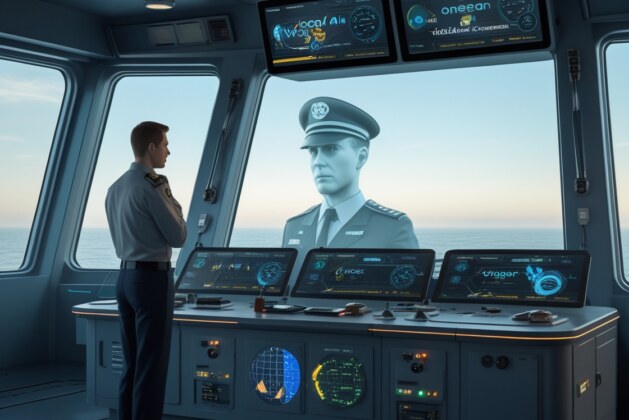
    Is the 2nd Officer the Next Victim of AI in the Merchant Navy?

    Once, every ship had a Radio Officer. Then came GMDSS, satellite communications, and automation—and the role faded into history. Today, the 2nd Officer, long seen as the ship’s navigator and planner, might be heading toward a similar fate, thanks to the rise of AI and intelligent marine software.


    The Evolving Role of the 2nd Officer

    Traditionally, the 2nd Officer has been responsible for:

    • Passage planning and route plotting
    • Chart corrections and publication updates
    • Meteorological monitoring and reports
    • Sending noon reports and vessel position updates
    • Operating GMDSS equipment
    • Watchkeeping and bridge management support

    But now, these core duties are being automated by software solutions that promise speed, accuracy, and optimization.


    AI Has Already Boarded the Bridge

    Here are some cutting-edge platforms that are redefining ship operations:

    • Orca AI: Uses computer vision and machine learning to enhance situational awareness, detect potential collisions, and optimize navigation in congested waters.
    • Voyager AI (by Voyager Worldwide): Automatically generates passage plans, provides real-time navigation data, and updates charts digitally—significantly reducing manual effort.
    • OneOcean (Enhanced): Offers a fully integrated platform for voyage planning, compliance, and environmental management, including digital reporting tools and automated chart updates.
    • Wärtsilä Navi-Planner: Allows remote voyage planning and execution, and integrates seamlessly with bridge systems to assist with decision-making.
    • ABB Ability™ Marine Pilot Control: Provides automated navigation support, including route optimization and collision avoidance, especially for remote or unmanned vessels.

    With these tools handling everything from planning to reporting, the traditional tasks of the 2nd Officer are shrinking rapidly.


    What’s Left for the 2nd Officer?

    The 2nd Officer is evolving into more of a system supervisor than a traditional navigator. Much like the Radio Officer once did, they now spend more time monitoring systems than actively creating or updating them.

    AI doesn’t sleep, doesn’t forget chart updates, and can analyze thousands of data points instantly. With machine learning continuously improving decision-making algorithms, the question arises: Does the 2nd Officer still have a long-term place on board?


    Is This the Beginning of the End?

    The maritime industry is exploring:

    • Reduced manning models
    • Shore-based navigation teams
    • Semi-autonomous bridge operations
    • Multi-functional officers instead of specific ranks

    For the 2nd Officer, this could mean:

    • Less hands-on navigational work
    • Greater emphasis on technical troubleshooting and systems monitoring
    • Cross-training in compliance, cyber-security, and automation

    Why the Human Element Still Matters—for Now

    Despite all the tech:

    • AI lacks judgment during unexpected emergencies
    • Machines can’t match human adaptability in morally complex decisions
    • System failures still require manual intervention
    • Leadership, communication, and safety drills need people

    So while AI tools like Orca AI and OneOcean enhance navigation, they’re not yet ready to replace human instinct and accountability entirely.


    Adapt or Be Replaced

    If you’re a 2nd Officer today, it’s time to reskill and rethink your future. Here’s how to stay relevant:

    • Learn to operate and troubleshoot advanced navigation systems
    • Gain data literacy and understanding of AI workflows
    • Take courses in cyber awareness and integrated ship systems
    • Stay updated on trends in maritime automation and compliance

    The 2nd Officer role may not disappear entirely—but it will be transformed.


    Final Thoughts

    The Radio Officer didn’t disappear because they were less skilled—it happened because technology evolved faster than roles adapted. Now, the 2nd Officer is standing on that same cliff edge.

    AI-driven systems like Voyager AI, Orca AI, and OneOcean are not threats—they’re tools. But the person who doesn’t know how to use them is at risk.

    The future doesn’t eliminate seafarers—it demands smarter, more tech-savvy ones.


    📢 If you’re a seafarer seeing changes in your duties because of AI, or have experience using these systems, share your story with us at shippys.org. Let’s document this digital evolution together.

  • Why Are All Ports Not Convenient for Seafarers?

    Why Are All Ports Not Convenient for Seafarers?

    The shipping industry is the silent engine of globalization—carrying over 90% of world trade across oceans. It’s often said that if shipping were to stop, half the world would go hungry.

    Yet, amid this undeniable importance, one vital element remains neglected: convenient access to ports for seafarers.

    🚢 Not All Ports Are Equal

    While ships can trade anywhere, crew relief, stores, and spares don’t enjoy the same flexibility. For a seafarer awaiting sign-off or expecting fresh provisions or critical machinery parts, only a handful of ports around the world are considered “convenient.” But why should that be the case in an era of global connectivity?

    ✈️ The Flight, Visa & Bureaucracy Barrier

    Some regions like South America, parts of Africa, and Indonesia are often skipped for crew changes simply because of high visa fees, complex immigration rules, or expensive flights. Even some European ports are avoided due to logistical or cost reasons. The result? Crew members are asked to “wait for the next port”—a next port that might be weeks, even months away.

    What starts as a 6-month contract often stretches into 8 or 9, simply because arranging relief at a “cheaper port” is easier on the company’s pocket.

    ⚙️ Spares & Stores: Still a Struggle

    The situation is no better when it comes to stores or critical spare parts. Many African ports, for instance, struggle with availability of technical services. I recall once when our gyrocompass was due for annual servicing—we reminded the office several times, yet no service technician was arranged.

    Only when the gyro failed six months later—at anchorage—did the company finally act. Thankfully, we were not sailing in heavy traffic when it happened.

    🧭 A Global Workforce With Local Problems

    Seafarers are global workers. They navigate international waters, abide by global regulations, and transport cargo for multinational corporations. So why do they have to deal with localized red tape, arbitrary port restrictions, and penny-pinching delays?

    If we can track a parcel from warehouse to doorstep across continents, surely we can build a system that supports efficient crew changes and spare deliveries worldwide.

    🛑 Time for Institutions to Intervene

    Organizations like IMO (International Maritime Organization), ILO (International Labour Organization), and ISF (International Shipping Federation) must step up. There needs to be a global resolution that ensures:

    • Every major trading port designates proper facilities for crew relief and service access
    • A standard set of immigration and visa protocols for seafarers
    • Encouragement of international cooperation to ease cost burdens on companies
    • Penalties for unreasonable delay in crew sign-offs or technical servicing

    ⚓ Let’s Not Forget the Human Element

    Seafarers keep the world running—quietly and without complaint. But that doesn’t mean they should be ignored. Behind every delayed sign-off or missed spare delivery is a tired worker missing home, or a potential safety hazard building up.

    Let’s make every port a seafarer-friendly port. Because when we ease life for those at sea, we make the entire industry—and the world—a more resilient place.


    The author is a Chief Officer sailing on merchant ships with years of experience navigating oceans and handling real-life challenges at sea. He writes from firsthand experience—sharing the ups, downs, and everything in between that comes with life onboard. Through his writing, he hopes to give a voice to fellow seafarers and spark change where it’s long overdue.

    Have something to share?
    If you’re a seafarer with a story or suggestion, contribute to shippys.org. Anonymous entries are welcome. Let your voice be heard.

    👉 Contribute now and be a voice for the community.
    For more information, click here.

    #SeafarersMatter #ShippingLife #CrewChangeCrisis #MaritimeSafety #ConvenientPorts #GlobalTrade

  • Medical Help Onboard – A Matter of Empathy, Not Ego

    Medical Help Onboard – A Matter of Empathy, Not Ego

    This article is based on a real-life experience shared anonymously by a general steward with Shippys.org, a platform that gives voice to seafarers’ untold stories.

    The steward recalled an incident where, upon reporting a genuine health concern to the 2nd Officer, he was mocked with an inappropriate comment linking his condition to masturbation. To his dismay, the Captain also joined in, rather than offering support. This experience highlights the toxic culture that still exists onboard some ships — where ridicule replaces empathy, and reporting a health issue is seen as a weakness.

    While the identities of those involved have been kept confidential, this story sheds light on a broader issue many seafarers face and calls for a much-needed change in onboard attitude and leadership.

    Life at sea is demanding, and physical as well as mental well-being is critical to a safe and efficient operation. Unfortunately, a troubling trend continues to persist onboard many vessels — the tendency to ignore or even mock someone who reports a health issue. This mindset is not only harmful but can also lead to serious consequences for the individual and the entire crew.


    Not Every Issue Needs a Hospital Visit

    It’s important to remember that not all medical issues require a hospital visit. Some can be effectively managed onboard with basic medical attention, rest, and monitoring. That’s why ships are equipped with a medical locker and basic first aid supplies. More importantly, every vessel has a designated medical officer — usually the 2nd Officer — who acts as the first responder for health concerns.

    But here’s the problem: many seafarers hesitate to report issues out of fear of being mocked, ignored, or labeled as lazy. This culture must change.


    The Wrong Approach: Mockery and Dismissal

    Imagine going to a doctor ashore with a health concern, only to be laughed at or brushed off without being taken seriously. How would that feel?

    Now, translate that situation to a ship. When a crew member gathers the courage to report a health issue and is met with ridicule or indifference, it not only demoralizes him but can delay critical treatment. On ships, delays can mean the difference between a manageable condition and a medical evacuation.


    Leadership Matters

    Some Captains and Chief Engineers, unfortunately, view a crew member reporting sick as a liability — something that increases paperwork, raises costs for the company, or reflects poorly on their own performance. But this mindset is flawed.

    Suppressing genuine health concerns doesn’t solve a problem — it worsens it. And if things escalate, the situation may demand shore medical assistance, repatriation, or even legal scrutiny — all of which are far more damaging, financially and reputationally, than taking early action.


    What Really Happens Onboard

    Here are some common scenarios that many seafarers would relate to:

    • A sick crew member is asked, “Why don’t you just rest and continue tomorrow?”
    • Others joke behind his back, calling him weak or lazy.
    • The 2nd Officer is hesitant to make an entry in the medical logbook.
    • The Captain frowns at the thought of making a medical report to the company.
    • The sick person is made to feel guilty for being unwell.

    All these actions create an unhealthy and unsafe working environment.


    Medical Assistance from Ashore: A Vital Resource

    Today, ships are not alone when it comes to medical emergencies. Most companies have tie-ups with telemedical assistance providers (TMAS) who are available 24/7 to guide onboard medical care.

    Even from the middle of the ocean, the ship’s medical officer or Master can:

    • Contact shore-based doctors for expert advice.
    • Share vital signs, photos, or videos to help with remote diagnosis.
    • Get step-by-step treatment guidance.
    • Decide with the doctor whether evacuation or diversion is needed.

    This service is confidential, professional, and focused on the well-being of the crew. It should never be viewed as a burden or something to be avoided just to save paperwork or costs.


    A Culture of Care

    It’s time to shift the mindset. Reporting a medical issue should be seen as a responsible act, not an excuse. We must:

    • Encourage open communication about health.
    • Support the designated medical officer in maintaining records and taking proactive action.
    • Train senior officers to respond with empathy and professionalism.
    • Make wellness a routine part of safety meetings, not an afterthought.
    • Use ashore medical assistance without hesitation when in doubt.

    Final Thoughts

    The sea is unforgiving, and a crew’s strength lies in its unity and support for one another. Health issues, when addressed early and respectfully, save lives and strengthen morale.

    So next time someone approaches you with a health concern, don’t dismiss or downplay it. Listen, help, and support — because tomorrow, it could be you needing that same compassion.


    📝 Share Your Story

    If you’ve experienced or witnessed something similar onboard — whether it’s about health, work culture, or life at sea — your voice matters. Shippys.org is a platform dedicated to bringing real seafarer experiences to light.

    📩 Contribute your story and help create awareness and change.

    👉 For more information or to submit your experience, click here

  • The Forgotten Human Element: Why Timely Sign-Offs Should Be Treated as Critical Operations

    The Forgotten Human Element: Why Timely Sign-Offs Should Be Treated as Critical Operations

    Every time a seafarer’s sign-off gets delayed, it’s not just a logistical hiccup—it’s a broken promise. A promise that they will return home on time, attend their child’s birthday, be with an ailing parent, or simply rest after months of exhausting work. Yet, time and again, we hear the same excuse: 

    “We’ll sign you off in the next port.”

    Why does this keep happening? And why is it so hard for offices to treat crew changes with the urgency they deserve?

    “Next Port” Is Not a Solution—It’s an Excuse

    When a seafarer submits a sign-off request due to exhaustion, family emergencies, or contractual obligations, the response should be immediate action—not procrastination.

    • If you can pressure crews to follow procedures flawlessly, why can’t you ensure their sign-offs happen just as efficiently?
    • If you can find mistakes in their work, why can’t you foresee and prevent delays in crew changes?

    Offices have highly qualified, well-paid staff—so why do we keep seeing the same systemic failures?

    The Human Cost of Delayed Sign-Offs

    A delayed sign-off isn’t just an inconvenience—it’s emotional distress for the seafarer and their family.

    • Missed milestones – Birthdays, anniversaries, graduations, and even funerals.
    • Mental exhaustion – Prolonged time at sea leads to burnout, affecting performance and safety.
    • Family strain – Spouses, children, and parents wait anxiously, only to be told “maybe next time.”

    Would shore-based employees accept such delays in their own lives? If an office worker’s leave was repeatedly postponed, there would be outrage. Yet, seafarers are expected to accept it as “part of the job.”

    Sign-Offs Should Be Treated as Critical Operations

    If offices can prepare risk assessments and safety protocols for cargo operations, why not for crew changes?

    • Plan ahead – Know vessel schedules, visa requirements, and flight availability in advance.
    • No more last-minute chaos – If a ship is heading to a sign-off port, replacements should already be arranged.
    • Accountability – If delays happen, there should be transparent explanations, not vague promises.

    A Call for Responsibility & Change

    Shipping companies pride themselves on efficiency and safety—yet crew welfare remains an afterthought.

    • Offices must stop treating sign-offs as “low priority.”
    • Managers should imagine themselves in the seafarer’s position—stranded at sea, missing life events, with no certainty.
    • Seafarers are not robots—they deserve respect, timely relief, and the dignity of keeping their word to their families.

    Final Thought

    If a company can ensure cargo reaches its destination on time, why can’t it ensure the same for its human crew?

    It’s time to stop saying “next port” and start saying “this port.” Because for every delayed sign-off, there’s a seafarer—and a family—paying the price.

    #FairTreatmentAtSea #TimelySignOffs #CrewWelfareMatters


    What are your experiences with sign-offs? Have you faced unnecessary delays? Share your