Category: đź’ˇ Health & Well-being

  • Satellite WhatsApp on Pixel 10: A Lifeline for Seafarers

    Satellite WhatsApp on Pixel 10: A Lifeline for Seafarers

    A Leap Beyond SOS: Voice & Video Calls Over Satellite

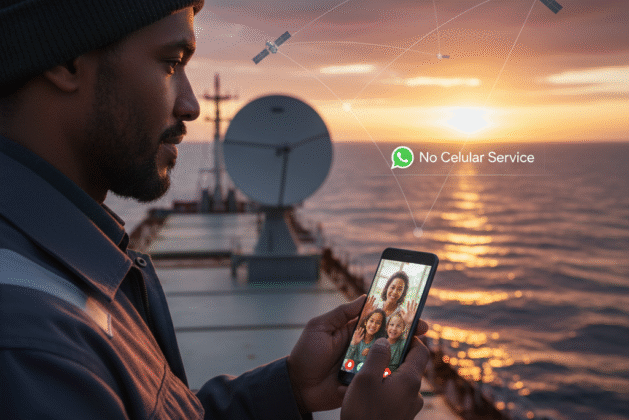
    Google’s Pixel 10 series has emerged as the first smartphone capable of making WhatsApp voice and video calls via satellite connection, enabling true off-grid communication—no mobile network or Wi-Fi needed. Starting August 28, 2025, these devices (Pixel 10, Pixel 10 Pro, Pixel 10 Pro XL) began offering the feature in supported regions.

    This feature is especially fitting for seafarers—who often journey into vast expanses of the ocean with little to no cellular coverage. The ability to voice- or video-call via WhatsApp over satellite, with a clear satellite icon appearing in the status bar, marks a shift from emergency-only connectivity to everyday, reliable communication.

    Why It Matters for Seafarers

    • Constant communication: Stay connected with family, ports, or rescue services even in signal-dead zones.
    • Visual assurance via video: Rather than just audio, video calls provide real-time visual updates—critical in emergency or logistical situations.
    • Secure & encrypted: WhatsApp calls over satellite retain end-to-end encryption, ensuring communications remain private.
    • Multi-layered safety: Pairing the Pixel 10’s satellite WhatsApp calls with its existing Satellite SOS and live location sharing via Maps/Find My Hub, this device forms a comprehensive off-grid safety toolkit.

    Availability in India

    Current Status

    As of now, the Pixel 10’s satellite-based WhatsApp calling feature is not yet available in India. Google is rolling out the feature initially in the United States, with availability in India expected later—contingent on partnerships with local carriers and regulatory approvals.

    Is It Reachable Soon?

    Reports mention that BSNL, India’s state-run telecom operator, has hinted at launching satellite-based services, which suggests groundwork is being laid. However, there’s currently no confirmed timeline when Pixel 10’s satellite WhatsApp calls will go live in India.


    Additional Pixel 10 Features Beneficial to Seafarers

    • Satellite SOS: Can send emergency alerts via satellite when in distress, even without cell signal—critical for remote ocean voyages.
    • Live Location Sharing: Share precise real-time position through Google Maps or Find My Hub over satellite—ideal for navigation tracking or rescue coordination.
    • Take a Message Feature: Built into the Phone app, this feature records and transcribes messages from missed calls, storing both audio and text. Though not directly satellite-dependent, it can help when returning to signal—particularly useful if the vessel briefly regains coverage

    Shippys.org Will Track and Update

    At shippys.org, we will closely monitor Pixel 10 satellite WhatsApp availability in India and share updates as soon as they’re confirmed. This feature has the potential to dramatically improve seafarer welfare and maritime safety, and we’re committed to keeping the community informed.

    If you have firsthand experience with satellite services, maritime connectivity, or want to share insights, we invite you to contribute to shippys.org. Your knowledge can help seafarers across the globe stay connected and safe

  • Women in Shipping – Progress, Challenges, and the Reality Check

    Women in Shipping – Progress, Challenges, and the Reality Check

    The shipping industry, one of the oldest and most male-dominated sectors, is undergoing a slow but visible transformation. As part of the push toward gender equality, aligned with the United Nations Sustainable Development Goal 5, many maritime organizations are now striving to recruit and retain women in seafaring roles. But while the intent is noble, the path forward demands a closer look at both opportunities and ground realities.


    Women in Maritime: The Numbers

    • According to the International Maritime Organization (IMO), women represent just 1.2% of the global seafarer workforce.
    • Out of this, 94% of women seafarers are employed in the cruise industry, where conditions are generally more structured and accommodating.
    • In India, as per DG Shipping, the number of women with valid Continuous Discharge Certificates (CDCs) rose from around 1,200 in 2014 to over 10,000 by 2023 — a positive trend, but still a small fraction compared to the total 250,000+ active seafarers.

    Despite this progress, the numbers tell us that women in core cargo shipping roles are still an exception, not the norm.


    The Life at Sea: Equal Opportunity or Unequal Challenge?

    Working at sea is vastly different from land-based jobs. Seafarers face long periods of isolation, erratic work hours, physical strain, and limited access to communication, often with internet limited to a few megabytes per day or restricted by time. These conditions can take a serious toll on mental health.

    Women face additional layers of complexity:

    • Safety concerns, especially on male-dominated vessels.
    • Lack of proper accommodation (many ships still don’t have designated women’s cabins or bathrooms).
    • Medical preparedness, as some ships don’t stock gender-specific health supplies unless prompted.
    • Social isolation, exacerbated by the lack of access to emotional support systems.

    Real-Life Cases

    On one of my previous vessels, a female 3rd Officer was scheduled to join. The company proactively sent a list of female-specific medical supplies to be stocked before her arrival. Instead of the usual officer cabin, she was allocated the pilot cabin, positioned next to the Master’s quarters—reflecting how onboard arrangements still require improvisation rather than inclusive planning.

    Another case I recall from my cadetship involved a female cadet who fainted during preparations for cargo hold cleaning—a physically demanding task. She was soon disembarked, allegedly for not being physically fit for the role. Though such incidents may not represent the majority, they highlight the gaps between policy and preparedness.


    Celebrating Success While Staying Grounded

    India is home to remarkable women like Captain Radhika Menon, the first female captain in the Indian Merchant Navy and the recipient of the IMO Award for Exceptional Bravery at Sea. Her rescue of seven fishermen from a sinking vessel in turbulent weather is a testimony to women’s capability in maritime leadership.

    These stories are important—but they should not blind us to the fact that true inclusion requires systemic change.


    A Balanced Approach Forward

    The maritime industry cannot afford to ignore half of the population. But inclusion must come with infrastructure, support systems, and mindset changes onboard.

    • Mandatory policies for safe accommodation, harassment prevention, and emergency support.
    • Mental health resources and regular communication access.
    • Training ship officers and crew in gender sensitivity and inclusive leadership.
    • Transparent data collection and reporting on gender dynamics onboard vessels.

    Conclusion

    Recruiting women into shipping is a step forward—but real progress will depend on how prepared the industry is to support them at sea. Equality isn’t just about access—it’s about enabling success without compromise.

    Let’s move forward with pride in our achievements, but also with honesty about our shortcomings.


    Below are the websites and direct links for the references cited in the blog

    1. UNCTAD: Review of Maritime Transport 2023

    2. International Maritime Organization (IMO): Women in Maritime Reports

    3. International Transport Workers’ Federation (ITF): Women Seafarers’ Health and Welfare Study

    4. World Maritime University (WMU): Gender Studies in Maritime

    5. WISTA International: Diversity in Maritime 2023


    Have a story to share or an experience to voice? Write to us at shippys.org — a platform by and for seafarers. Anonymous entries welccome.

  • Medical Help Onboard – A Matter of Empathy, Not Ego

    Medical Help Onboard – A Matter of Empathy, Not Ego

    This article is based on a real-life experience shared anonymously by a general steward with Shippys.org, a platform that gives voice to seafarers’ untold stories.

    The steward recalled an incident where, upon reporting a genuine health concern to the 2nd Officer, he was mocked with an inappropriate comment linking his condition to masturbation. To his dismay, the Captain also joined in, rather than offering support. This experience highlights the toxic culture that still exists onboard some ships — where ridicule replaces empathy, and reporting a health issue is seen as a weakness.

    While the identities of those involved have been kept confidential, this story sheds light on a broader issue many seafarers face and calls for a much-needed change in onboard attitude and leadership.

    Life at sea is demanding, and physical as well as mental well-being is critical to a safe and efficient operation. Unfortunately, a troubling trend continues to persist onboard many vessels — the tendency to ignore or even mock someone who reports a health issue. This mindset is not only harmful but can also lead to serious consequences for the individual and the entire crew.


    Not Every Issue Needs a Hospital Visit

    It’s important to remember that not all medical issues require a hospital visit. Some can be effectively managed onboard with basic medical attention, rest, and monitoring. That’s why ships are equipped with a medical locker and basic first aid supplies. More importantly, every vessel has a designated medical officer — usually the 2nd Officer — who acts as the first responder for health concerns.

    But here’s the problem: many seafarers hesitate to report issues out of fear of being mocked, ignored, or labeled as lazy. This culture must change.


    The Wrong Approach: Mockery and Dismissal

    Imagine going to a doctor ashore with a health concern, only to be laughed at or brushed off without being taken seriously. How would that feel?

    Now, translate that situation to a ship. When a crew member gathers the courage to report a health issue and is met with ridicule or indifference, it not only demoralizes him but can delay critical treatment. On ships, delays can mean the difference between a manageable condition and a medical evacuation.


    Leadership Matters

    Some Captains and Chief Engineers, unfortunately, view a crew member reporting sick as a liability — something that increases paperwork, raises costs for the company, or reflects poorly on their own performance. But this mindset is flawed.

    Suppressing genuine health concerns doesn’t solve a problem — it worsens it. And if things escalate, the situation may demand shore medical assistance, repatriation, or even legal scrutiny — all of which are far more damaging, financially and reputationally, than taking early action.


    What Really Happens Onboard

    Here are some common scenarios that many seafarers would relate to:

    • A sick crew member is asked, “Why don’t you just rest and continue tomorrow?”
    • Others joke behind his back, calling him weak or lazy.
    • The 2nd Officer is hesitant to make an entry in the medical logbook.
    • The Captain frowns at the thought of making a medical report to the company.
    • The sick person is made to feel guilty for being unwell.

    All these actions create an unhealthy and unsafe working environment.


    Medical Assistance from Ashore: A Vital Resource

    Today, ships are not alone when it comes to medical emergencies. Most companies have tie-ups with telemedical assistance providers (TMAS) who are available 24/7 to guide onboard medical care.

    Even from the middle of the ocean, the ship’s medical officer or Master can:

    • Contact shore-based doctors for expert advice.
    • Share vital signs, photos, or videos to help with remote diagnosis.
    • Get step-by-step treatment guidance.
    • Decide with the doctor whether evacuation or diversion is needed.

    This service is confidential, professional, and focused on the well-being of the crew. It should never be viewed as a burden or something to be avoided just to save paperwork or costs.


    A Culture of Care

    It’s time to shift the mindset. Reporting a medical issue should be seen as a responsible act, not an excuse. We must:

    • Encourage open communication about health.
    • Support the designated medical officer in maintaining records and taking proactive action.
    • Train senior officers to respond with empathy and professionalism.
    • Make wellness a routine part of safety meetings, not an afterthought.
    • Use ashore medical assistance without hesitation when in doubt.

    Final Thoughts

    The sea is unforgiving, and a crew’s strength lies in its unity and support for one another. Health issues, when addressed early and respectfully, save lives and strengthen morale.

    So next time someone approaches you with a health concern, don’t dismiss or downplay it. Listen, help, and support — because tomorrow, it could be you needing that same compassion.


    📝 Share Your Story

    If you’ve experienced or witnessed something similar onboard — whether it’s about health, work culture, or life at sea — your voice matters. Shippys.org is a platform dedicated to bringing real seafarer experiences to light.

    đź“© Contribute your story and help create awareness and change.

    👉 For more information or to submit your experience, click here

  • Risk Assessment Overkill: When Safety Procedures Become a Comedy
    Risk Assessment Overkill: When Safety Procedures Become a Comedy

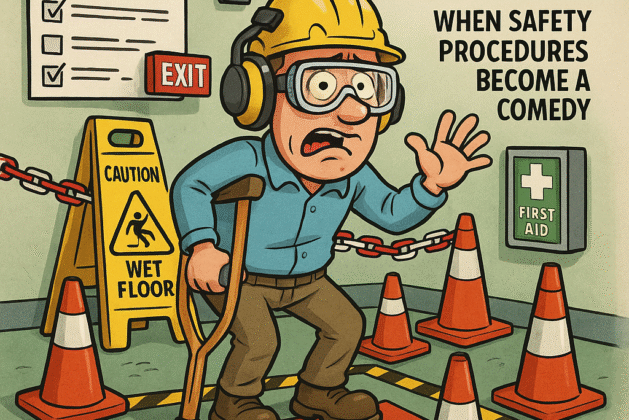
    Safety at sea is sacred. As mariners, we know better than anyone that cutting corners can cost lives. Hazard identification, risk assessments, and proper procedures are the backbone of our industry—when applied correctly. 

    But somewhere along the way, common sense jumped overboard, and we’ve been left drowning in paperwork for even the simplest tasks.

    From Necessary to Nonsense: The Sinking of Practical Safety

    There was a time when Permit-to-Work (PTW), Job Safety Analysis (JSA), Risk Assessment (RA) and Toolbox Talks were reserved for genuinely high-risk operations:

    • Hot work near fuel tanks
    • Enclosed space entry
    • Working aloft in heavy weather
    • Handling hazardous cargo

    These were situations where a single mistake could mean disaster. The paperwork had a purpose—it forced us to stop, think, and mitigate real dangers.

    But today? We’re asked to fill out 10-page risk assessments for jobs like:

    • Changing a light bulb in the mess room (Hazard: “Potential electric shock if bulb is not switched off.” Control: “Ensure bulb is switched off before replacement.”)
    • Carrying a box of paperwork to the bridge (Hazard: “Muscle strain if lifting improperly.” Control: “Use correct lifting technique.”)
    • Plugging in a laptop (Hazard: “Tripping over cables.” Control: “Secure cables properly.”)

    At what point did we decide that professional seafarers—who navigate storms, engine failures, and piracy threats—need a written procedure to remind them not to trip over a power cord?

    The Real Danger: Safety Fatigue

    This over-the-top bureaucracy isn’t just annoying—it’s counterproductive. Here’s why:

    1. It Wastes Time â€“ Officers spend more time filling out forms than actually managing risks.
    2. It Breeds Complacency â€“ When every task requires the same level of paperwork, crews stop taking the real hazards seriously.
    3. It Undermines Authority â€“ An electricalofficer shouldn’t need a checklist to know that working on live electrical systems is dangerous.

    Worst of all, it turns safety into a joke. 

    When crews see a JSA for “using a ladder to access the storeroom,” they start rolling their eyes at all safety procedures—even the critical ones.

    Who’s to Blame? The “Zero Harm” Myth

    The root of this madness isn’t the ship’s crew—it’s shore-based management, auditors, and insurance companies who’ve never spent a night on a rolling deck but insist on “100% compliance.” They’ve turned safety into a box-ticking exercise, where the goal isn’t preventing accidents but avoiding liability.

    How Do We Fix This?

    1. Bring Back Common Sense â€“ Not every task needs a JSA. Trust experienced mariners to assess risks on the spot.
    2. Focus on Real Hazards â€“ Reserve detailed assessments for high-risk operations (enclosed spaces, hot work, heavy lifts).
    3. Simplify the Process â€“ A 5-minute toolbox talk is often more effective than a 10-page form.
    4. Push Back Against Shore Bureaucracy â€“ Senior officers should challenge unnecessary paperwork instead of blindly enforcing it.

    Conclusion: Safety Should Be Smart, Not Stupid

    We don’t need more paperwork—we need better judgment. Risk assessments are vital when used correctly, but drowning crews in pointless forms doesn’t make anyone safer. It’s time to cut the nonsense and get back to real safety at sea.

    What’s the most ridiculous risk assessment you’ve seen onboard?

    Share your stories in the comments—or better yet, contribute to Shippys.org and let’s bring sanity back to maritime safety!

    #MaritimeSafety #CommonSense #RiskAssessment #MerchantNavy #StopThePaperwork


  • New Crew Onboard, Show Patience Not Judgment

    New Crew Onboard, Show Patience Not Judgment

    Change is inevitable, especially in the dynamic environment of shipboard operations. When a seasoned, efficient crew member signs off and a new one joins, comparisons are bound to happen. The old guy knew every tool’s location, every shortcut in the maintenance routine, and every trick to get things done swiftly. The new guy? He’s still finding his footing, learning the ropes, and making mistakes.

    It’s easy to shout, criticize, or even laugh at his errors. But is that the right approach?

    Experience Comes with Time

    The old crew member wasn’t born with all that knowledge. He learned over months (or years) of working on the same ship. He made mistakes, asked questions, and gradually became the efficient professional you remember. The new guy deserves the same opportunity.

    Attitude Over Instant Skill

    What matters most is not how fast he works on day one, but whether he has the right attitude—willingness to learn, work hard, and improve. Skills can be taught, but a bad attitude is far harder to fix. If he’s eager and committed, he’ll get there.

    The Hare and the Tortoise: A Lesson in Leadership

    Not everyone is a hare—fast, sharp, and quick to adapt. Some are tortoises—steady, persistent, and thorough. The hare may sprint ahead, but the tortoise brings reliability, attention to detail, and resilience. A good leader knows how to utilize both.

    Mocking or pressuring the new guy only breaks his confidence. Instead:

    • Guide him – Show him where tools are, explain procedures clearly.
    • Support him – Let him know mistakes are part of learning.
    • Be patient – Speed will come with familiarity.
    • Encourage him – A little confidence goes a long way.

    Final Thought: Remember Your First Day

    Before you judge, think back to your first days onboard. Were you perfect? Did you know everything? Treat the new guy the way you’d want to be treated—with patience, respect, and mentorship.

    In the end, a strong team isn’t built by tearing people down but by lifting them up. The tortoise may be slow today, but with the right support, he’ll cross the finish line—reliable, skilled, and an asset to the crew.

    Be the leader who nurtures, not the one who discourages.


  • The Forgotten Human Element: Why Timely Sign-Offs Should Be Treated as Critical Operations

    The Forgotten Human Element: Why Timely Sign-Offs Should Be Treated as Critical Operations

    Every time a seafarer’s sign-off gets delayed, it’s not just a logistical hiccup—it’s a broken promise. A promise that they will return home on time, attend their child’s birthday, be with an ailing parent, or simply rest after months of exhausting work. Yet, time and again, we hear the same excuse: 

    “We’ll sign you off in the next port.”

    Why does this keep happening? And why is it so hard for offices to treat crew changes with the urgency they deserve?

    “Next Port” Is Not a Solution—It’s an Excuse

    When a seafarer submits a sign-off request due to exhaustion, family emergencies, or contractual obligations, the response should be immediate action—not procrastination.

    • If you can pressure crews to follow procedures flawlessly, why can’t you ensure their sign-offs happen just as efficiently?
    • If you can find mistakes in their work, why can’t you foresee and prevent delays in crew changes?

    Offices have highly qualified, well-paid staff—so why do we keep seeing the same systemic failures?

    The Human Cost of Delayed Sign-Offs

    A delayed sign-off isn’t just an inconvenience—it’s emotional distress for the seafarer and their family.

    • Missed milestones – Birthdays, anniversaries, graduations, and even funerals.
    • Mental exhaustion – Prolonged time at sea leads to burnout, affecting performance and safety.
    • Family strain – Spouses, children, and parents wait anxiously, only to be told “maybe next time.”

    Would shore-based employees accept such delays in their own lives? If an office worker’s leave was repeatedly postponed, there would be outrage. Yet, seafarers are expected to accept it as “part of the job.”

    Sign-Offs Should Be Treated as Critical Operations

    If offices can prepare risk assessments and safety protocols for cargo operations, why not for crew changes?

    • Plan ahead – Know vessel schedules, visa requirements, and flight availability in advance.
    • No more last-minute chaos – If a ship is heading to a sign-off port, replacements should already be arranged.
    • Accountability – If delays happen, there should be transparent explanations, not vague promises.

    A Call for Responsibility & Change

    Shipping companies pride themselves on efficiency and safety—yet crew welfare remains an afterthought.

    • Offices must stop treating sign-offs as “low priority.”
    • Managers should imagine themselves in the seafarer’s position—stranded at sea, missing life events, with no certainty.
    • Seafarers are not robots—they deserve respect, timely relief, and the dignity of keeping their word to their families.

    Final Thought

    If a company can ensure cargo reaches its destination on time, why can’t it ensure the same for its human crew?

    It’s time to stop saying “next port” and start saying “this port.” Because for every delayed sign-off, there’s a seafarer—and a family—paying the price.

    #FairTreatmentAtSea #TimelySignOffs #CrewWelfareMatters


    What are your experiences with sign-offs? Have you faced unnecessary delays? Share your

  • Is It Realistically Possible to Strictly Maintain Rest Hours Onboard with the Current Manning Strength?

    Is It Realistically Possible to Strictly Maintain Rest Hours Onboard with the Current Manning Strength?

    Maintaining rest hours onboard ships has been a long-standing challenge in the maritime industry. Despite regulations under the STCW Convention and MLC 2006 mandating minimum hours of rest for seafarers, the reality is often far from ideal.

    With the current manning strength, especially on many merchant vessels, it becomes increasingly difficult—if not impossible—to strictly comply with rest hour requirements.

    The Port Challenge: Long Hours and Non-Stop Operations

    The issue becomes more critical when ships are at port. Port stays are hectic periods involving:

    • Continuous cargo operations (loading/unloading)
    • Frequent paperwork and inspections
    • Dealing with port authorities and agents
    • Preparation for departure

    All these tasks demand the active involvement of the crew, especially deck and engine officers. The Chief Officer and Second Engineer, for instance, are often required to be available almost round the clock, managing the cargo and machinery operations while also ensuring safety.

    As a result, rest hours are either compromised or, at times, manipulated on paper to show compliance.

    Pressure from Management: A Silent Reality

    Adding to the challenge is the unspoken pressure from shore management. While companies emphasize compliance on paper, seafarers often face subtle or direct pressure to “get the job done”—even if it means violating rest hours. Some common scenarios include:

    • Urging the crew to complete tasks faster to reduce port stay
    • Expecting seafarers to handle multiple roles without extra manpower
    • Insisting on strict compliance only in records, not in practice

    This conflict between operational demands and regulatory compliance puts seafarers in a difficult position, forcing them to choose between safety and following orders.

    The Way Forward

    To realistically maintain rest hours, there needs to be:

    âś… Adequate manning onboard, especially during port stays
    âś… Realistic voyage planning to avoid overworking the crew
    âś… Genuine support from management, understanding the challenges faced by the crew
    âś… Proper risk assessment for tasks that may lead to fatigue

    Until these systemic issues are addressed, strict compliance with rest hours remains a theoretical ideal rather than an achievable reality.